
23/2/2026- Union for Justice Foundation
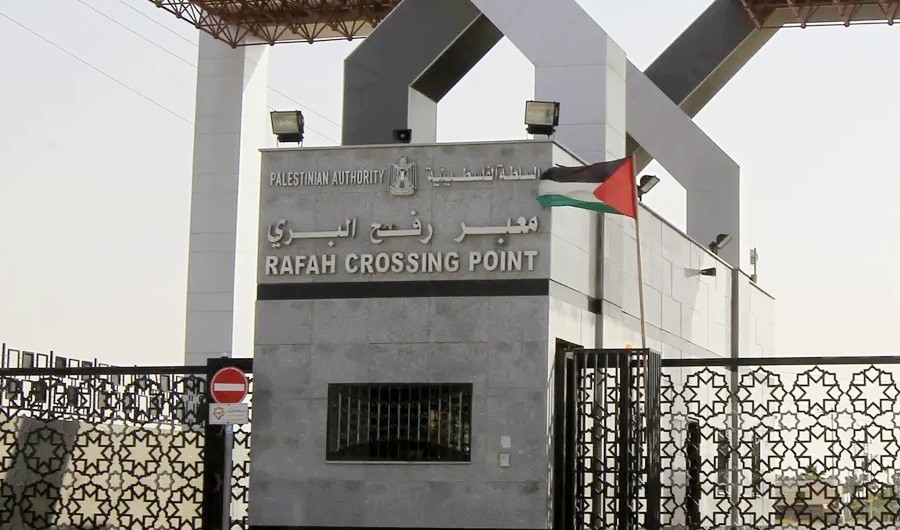
The testimonies received address the experience of Palestinians returning to Gaza following the limited reopening of the Rafah Crossing on 2 February 2026, when very small numbers were allowed to return each day. The journey back begins at night from the Egyptian city of Al-Arish, amid a long series of security procedures and repeated inspections.
Fariza Barbach, one of the first to return to Gaza after the reopening of Rafah, who entered Gaza in the early hours of 3 February, said: “The experience of returning was difficult, between waiting, inspections, and the authorities taking most of our belongings, but in the end we survived, and that is what matters most.”
According to numerous testimonies received by the Union for Justice, the process begins on the Egyptian side with an initial inspection. The returnees are then transferred through narrow corridors surrounded by barbed wire to the Palestinian side of the crossing, in a scene many described as closer to a prison. There, they undergo a new inspection under the supervision of the European Union Border Assistance Mission at Rafah (EUBAM), with the participation of Palestinian Authority staff, under strict restrictions that include prohibiting the entry of more than one bag, or sums of money exceeding a certain limit, in addition to banning many electronic devices. As a result, many returnees are compelled to relinquish a large portion of their belongings, including essential needs, personal items, and children’s toys.
The suffering does not end there. Buses are later transported under military escort to checkpoints controlled by local militias cooperating with Israel, where returnees are subjected to threats and intimidation, their belongings scattered, and their personal property confiscated. They are then handed over to the Israeli army, which conducts manual body searches and harsh interrogations that, in some cases, included blindfolding, restraint, threats of arrest, psychological humiliation, and even offers of emigration to other countries.
After these procedures are completed, the returnees are transported to Khan Younis, where the greatest shock unfolds in the form of widespread destruction affecting neighborhoods, homes, and infrastructure, leading many to describe Gaza as a “ghost city.” Despite the pain and sorrow, most returnees, according to their testimonies, expressed their steadfast commitment to their right of return and their rejection of the idea of abandoning their homeland, affirming that Gaza, despite the devastation, remains the place to which they belong.
In contrast, the article presents the suffering of Palestinians seeking to leave Gaza, particularly the sick and wounded. Tens of thousands have registered their names to depart Gaza in search of medical treatment, yet the numbers permitted to leave remain extremely limited. According to data from the World Health Organization, more than 900 Palestinians have died while waiting for medical evacuation since the crossing was closed in May 2024. Some of those who managed to leave described the procedures as relatively easier than returning, yet the journey amid destruction and military checkpoints remained filled with fear and anxiety.
Numerous scenes and testimonies conveyed a bleak picture of the current reality of the Rafah Crossing, marked by a return fraught with humiliation, inspections, and intimidation; a slow and limited exit for patients; and prolonged waiting that cost many their health and their lives. Nevertheless, Palestinian determination endures in holding fast to the land and returning to Gaza, no matter how harsh the experience.
End
