“Deterrence”… The Key to the Policy
“Union for Justice Foundation”: The Occupation Expands Its Home Demolition Policy to Include Prisoners Whose Planned Operations Did Not Result in Israeli Deaths or Injuries
21/11/2026 – Union for Justice Foundation
The Union for Justice Foundation stated that the Israeli occupation authorities have recently expanded their policy of demolishing the homes of Palestinian prisoners to include individuals who planned operations that did not result in the deaths or injuries of Israelis.
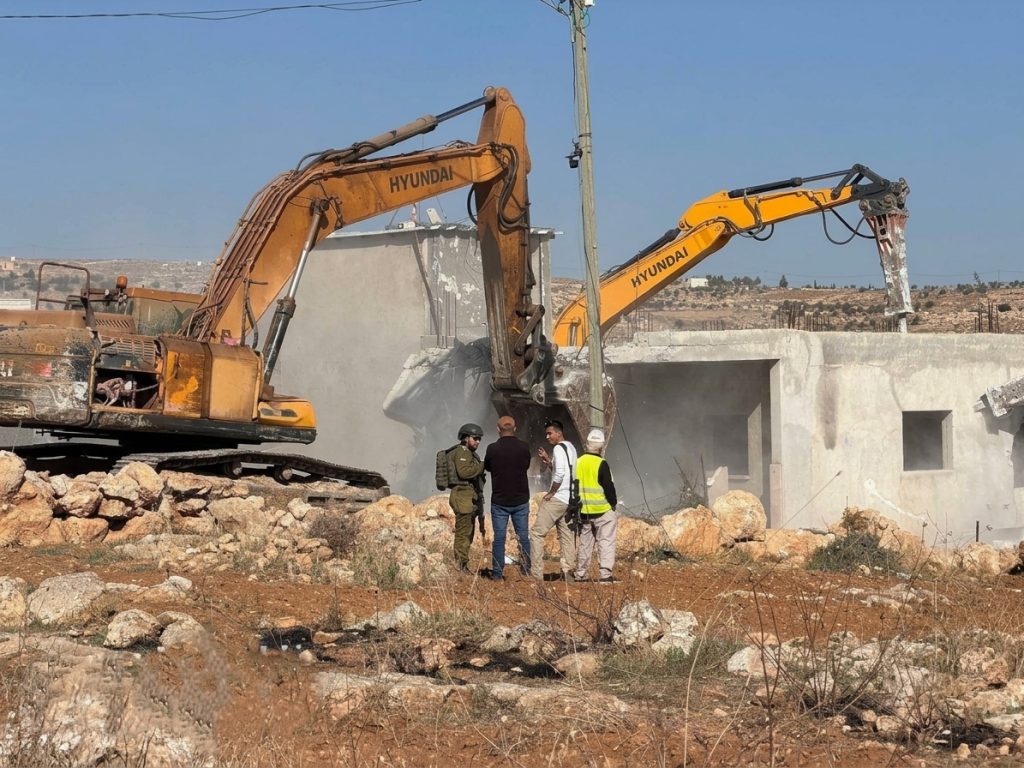
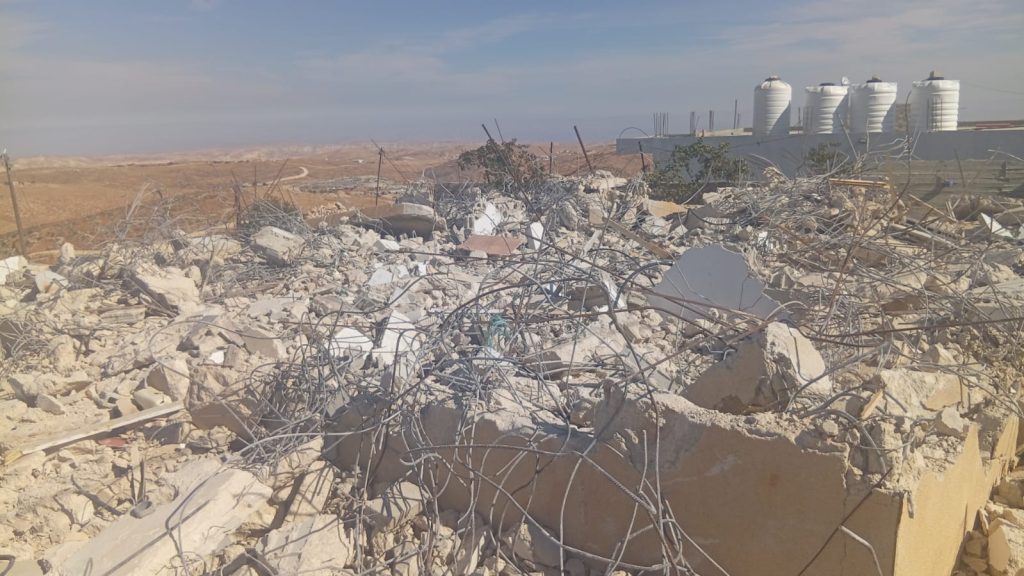
The Foundation explained that on 16 November, the Israeli army blew up the homes of two prisoners, Ibrahim Abu Awadi and Abdullah al-Khatib al-Rimawi, in the village of Kafr Ni’ma, west of Ramallah and Al-Bireh Governorate. Each house covered an area of approximately 160 square metres, resulting in the displacement of more than 10 members of the two prisoners’ families.
The Foundation noted that the Israeli Supreme Court upheld the demolition orders, even though the two prisoners had been convicted only of planning attacks and manufacturing locally produced rockets, and their activities had not resulted in any Israelis being injured or killed.
The Union for Justice Foundation pointed out that, until recently, the occupation authorities had demolished the homes of Palestinian prisoners convicted of carrying out operations that resulted in Israeli deaths or extremely serious injuries. This indicates that the criterion of an Israeli death or injury is no longer an absolute requirement in the application of Israeli judicial policy.
The Foundation warned that the demolition of the homes of the two prisoners in Kafr Ni’ma could establish a judicial precedent in Israeli courts, paving the way for similar demolitions in the future or for the policy to be applied retroactively against certain prisoners.
The Union for Justice Foundation stressed that all demolitions of Palestinian homes, regardless of the justifications advanced by the occupation authorities, are unjustified and violate international law. Such demolitions constitute a form of collective punishment that results in the displacement of hundreds of people.
It added: “An examination of the reasons driving the Israeli judicial system to adopt this new policy reveals that its key objective is deterrence: intimidating Palestinians, instilling fear in them, and terrorising them. This approach is also in line with the wishes of the extremist Israeli government, which views home demolitions as a means of forcibly displacing Palestinians, as has occurred in refugee camps in the northern West Bank.”
The occupation authorities base their demolition and sealing of Palestinian prisoners’ homes on Article 119 of the Defence (Emergency) Regulations, 1945, regulations introduced by the British Mandate authorities in Palestine before the establishment of Israel.
By contrast, Article 33 of the Fourth Geneva Convention prohibits collective punishment, of which the demolition of homes is considered a form.
Demolition and Destruction of 17 Homes Belonging to the Families of Martyrs and Prisoners
According to the monitoring and documentation carried out by the Union for Justice Foundation, since the beginning of the current year, the occupation authorities have demolished or blown up 17 homes belonging to the families of martyrs and prisoners—nine martyrs and eight prisoners—who had participated in operations that resulted in Israeli deaths and injuries.
On 14 January, occupation forces blew up the home of prisoner Ahmad Abu al-Rub in the town of Qabatiya, south of Jenin. The following day, occupation bulldozers demolished the home of the family of martyr Imran al-Atrash in the city of Hebron.
On 2 February, occupation soldiers blew up the home of martyr Mahmoud Yusuf Abed in the town of Halhul, north of Hebron. On 17 February of the same month, occupation bulldozers demolished the three-storey home of martyr Raafat Dawasah in the town of Silat al-Harithiya, west of Jenin.
A day later, occupation soldiers blew up the home of the family of martyr Walid Sabarna in the town of Beit Ummar, north of Hebron. The home was located on the top floor of a three-storey building.
On 14 March, occupation soldiers blew up the apartment of prisoner Azmi Nader Abu Halil in the al-Namous neighbourhood of the town of Dura, south of Hebron. The apartment housed 10 members of his family. On 28 March of the same month, occupation forces blew up the home of the family of martyr Mahmoud al-Aqqad on Halawa Street, east of Nablus.
On 11 August, occupation soldiers blew up the home of martyr Farouq Ramadan in the village of Tell, southwest of Nablus. On 8 September, a military bulldozer demolished the home of martyr Abdul Karim Mohammad Khader Suleiman in the town of Aqraba, south of Nablus, while parts of the house were also struck with projectiles.
On 14 September, the Israeli army’s engineering corps blew up the home of prisoner Dawas Hassoun in the village of Beit Imrin, northwest of Nablus, after surrounding the property and evacuating it. The explosion caused damage to neighbouring buildings.
On 7 October, occupation forces blew up the home of prisoner Qadri Samara in the town of Badu, northwest of occupied Jerusalem, after raiding the town and evacuating the home and surrounding houses of their residents.
On 30 October, the Israeli army blew up the homes of the two martyrs, Ahmad and Hamoudah al-Ja’bah, in the besieged area of Deir Bahha in the city of Hebron.
On 28 October, occupation forces demolished and blew up the homes of two prisoners, Abdul Karim Dawood and Zakaria Mohammad Dawood, in the town of Beita, south of Nablus. Each house covered an area of approximately 150 square metres.
On 16 November, occupation forces blew up the homes of the two prisoners, Ibrahim Abu Awadi and Abdullah al-Khatib al-Rimawi, in the village of Kafr Ni’ma, west of Ramallah and Al-Bireh Governorate. Each house covered an area of approximately 160 square metres, resulting in the displacement of more than 10 members of the two prisoners’ families.
End
