Union for Justice: The Occupation Demolished Dozens of Residential and Commercial Units in the West Bank During July 2025
August 6, 2025 – Union for Justice Foundation
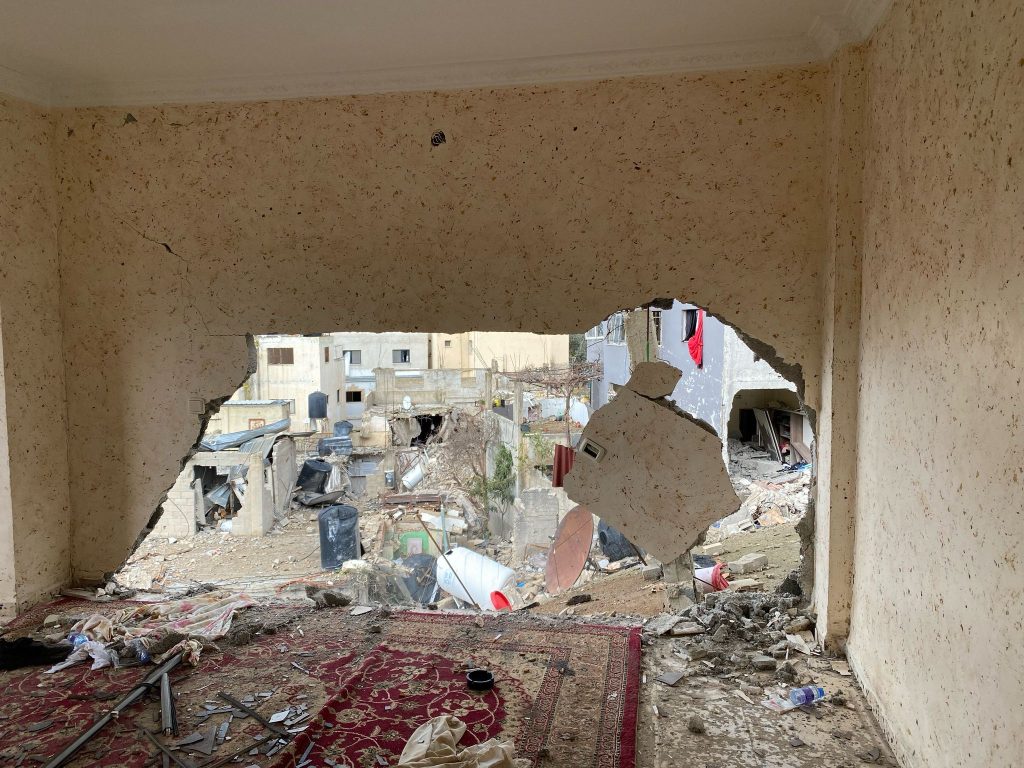
The Union for Justice Foundation stated that the Israeli occupation authorities carried out thirty-nine (39) demolition operations in the West Bank and the occupied city of Jerusalem during July, targeting dozens of residential, commercial, agricultural, and livestock structures, in addition to water wells.
The Foundation explained that the demolitions were concentrated in Jerusalem, where the occupation executed thirteen (13) demolition operations last month, followed by five (5) in Ramallah, five (5) in Bethlehem, three (3) in Tulkarm, three (3) in Qalqilya, three (3) in the Jordan Valley and Jericho, two (2) in Nablus, two (2) in Jenin, two (2) in Salfit, and one (1) in Hebron.
According to the Foundation, these demolitions resulted in the displacement and forced eviction of hundreds of citizens from their places of residence, compelling them to relocate after having been left without shelter. It further noted that these demolitions occurred while occupation bulldozers continued large-scale destruction operations in Nur Shams and Tulkarm refugee camps.
The occupation authorities advance various justifications for demolishing Palestinian homes, primarily alleging that such structures were erected in Area (C) without the requisite building permits, or on the grounds of their proximity to settlements and roads under occupation control.
Conversely, Israeli planning departments deliberately obstruct Palestinians’ access to permits, forcing many—under the pressure of overcrowding—to build without authorization. Moreover, the permit process itself is prohibitively costly and extremely complex, particularly in Jerusalem.
The occupation further employs home demolitions as a punitive measure against the families of martyrs and prisoners whose relatives engage in resistance or military operations.
These demolitions are not confined to permanent residences alone; they also encompass mobile homes, commercial establishments, agricultural barracks, and residential tents sheltering Bedouin families.
Such violations form part of the occupation’s ongoing policy of forcible transfer and demographic engineering against Palestinian cities, especially Jerusalem, where numerous homes have been destroyed since the beginning of this year with the objective of constricting its Palestinian residents, driving them to abandon the city, and simultaneously expanding settlement neighborhoods. In addition, the occupation authorities continue to distribute dozens of demolition notices to residents in Palestinian areas in preparation for further demolitions.
Demolish Your Own Home
Upon receiving a demolition order against his home, the Palestinian citizen attempts to resist by pursuing legal proceedings and submitting petitions to the Israeli courts. However, these courts ultimately issue rulings in favor of demolition.
Subsequently, Israeli bulldozers and demolition machinery arrive at the site, granting the Palestinian resident only a very limited amount of time—insufficient even to remove essential belongings from the house. In many cases, the demolition takes place over the household possessions themselves, resulting in a double loss: the destruction of both the home and its contents.
After the demolition is carried out, the occupying authorities deliver an invoice to the homeowner for the cost of the demolition, demanding payment through Israeli banks. Failure to comply results in the threat of imprisonment. Consequently, many citizens are forced to demolish their own homes, as self-demolition entails significantly lower costs.
Demolitions in the City of Jerusalem
As previously indicated, the city of Jerusalem bore the greatest share of Israeli demolition operations.
On 1 July, Israeli bulldozers demolished the home of Tayseer Abu Najma in the town of Beit Hanina, north of Jerusalem, displacing his family of five. On the same day, the occupation authorities forced the Burqan family to demolish its own home in Wadi Yasul, Silwan, south of Al-Aqsa Mosque, displacing seven members of the family.
On 3 July, Israeli bulldozers demolished several residential and agricultural caravans in the Rawabi al-Issawiya area, northeast of occupied Jerusalem. On 7 July, occupation bulldozers destroyed two tin houses and more than fifty water tanks in the al-Mushtal area, east of Al-Eizariya.
On 8 July, bulldozers demolished a building under construction in al-Salam suburb of Anata, northeast of Jerusalem, which included 15 commercial shops and 8 residential apartments, owned by Mohammad Hamza Ghaith and Yaseen Ibrahim Abu Shamsiya.
On 9 July, occupation bulldozers demolished the home of Tariq Shweiki in Ath-Thuri, Silwan, as well as another house belonging to the Burqan family in Wadi Yasul, Silwan.
On 14 July, the occupation authorities forced Maher al-Salaymeh to demolish his home himself in Wadi Qaddum, Silwan, south of Al-Aqsa Mosque. The house, consisting of two apartments and sheltering seven family members, had stood for more than 35 years and measured approximately 140 m².
On 22 July, the occupation authorities compelled Subhiya Shaqirat to demolish her 55 m² home in Jabal al-Mukabber, southeast of occupied Jerusalem, displacing her family of five, under the pretext of construction without a permit.
On 24 July, brothers Ayyoub and Ibrahim Qanbar were forced to carry out self-demolition of their homes in Jabal al-Mukabber under the same pretext. The demolition displaced ten residents who had been living in the two apartments with a total area of approximately 140 m².
On 27 July, the occupation authorities forced the Qara’in family to carry out a self-demolition of its home in the al-Farouq neighborhood of Jabal al-Mukaber. On the same day, they also compelled the Halawani family in al-Farouq, Jabal al-Mukaber, to demolish its six-apartment residential building, resulting in the displacement of about 30 individuals, including children.
On 28 July, the occupation authorities forced Yousef Qara’in, from Jabal al-Mukaber, to self-demolish his 70 m² home, which had been standing for 12 years and housed him, his wife, and daughter, under the pretext of lacking a permit.
On 29 July, Israeli bulldozers demolished a residential structure and a car wash belonging to Hani al-Salaymeh in Ein al-Louza, Silwan, and tore down a wall surrounding the site of Tamer Ouda’s home in al-Bustan, weeks after his house had already been demolished.
It is worth noting that since the beginning of the aggression against the Gaza Strip on 7 October 2023, the occupation authorities have demolished 623 homes and structures in the Jerusalem governorate. These included long-inhabited residences, houses under construction, as well as commercial and economic establishments that served as a source of livelihood for dozens of Jerusalemite families.
Demolitions in Ramallah and Al-Bireh Governorate
In addition to the large-scale demolitions in Jerusalem, the governorate of Ramallah and Al-Bireh witnessed five (5) demolition operations during the past month.
On 2 July, Israeli bulldozers demolished the home of Khalil Salama al-Azazmeh, which was inhabited by him, his family, and the family of his son Eid, in the town of Ni’lin, west of Ramallah. The house consisted of two floors, each with an area of approximately 160 m².
On 7 July, bulldozers demolished a four-story residential building belonging to the family of Mahmoud Mohammad Musa al-Habl in the village of Kharbatha al-Misbah, west of Ramallah, under the pretext of building without a permit. The building housed about 50 people, with each floor measuring 180 m², and had been standing for more than 20 years.
On 9 July, occupation bulldozers demolished four homes with a total area of 680 m², in addition to two agricultural barracks, in the town of Shaqba, northwest of Ramallah. The properties belonged to Salama al-Masri and his sons, Mo’taz and Hani, as well as Ziad Zayed Hassan.
On the same day, bulldozers demolished the home of Khaled Abu Allan in the village of Um Safa, northwest of Ramallah, on the grounds of its proximity to a settlement outpost that settlers had established the previous year.
On 23 July, the occupation demolished four residential tents and three barracks in the village of al-Mughayyir, northeast of Ramallah.
Demolitions in Bethlehem Governorate
During the past month, Israeli occupation forces carried out five (5) demolitions in Bethlehem Governorate:
On 2 July, Israeli bulldozers demolished an agricultural room belonging to Fadi Salim Shousha in the Ain al-Balad area, west of Husan village, west of Bethlehem, under the pretext of building without a permit.
On 14 July, bulldozers demolished another agricultural room belonging to Bilal Saud Fanoun in the Banias area of Nahalin, west of Bethlehem, also citing lack of a permit. On the same day, they demolished a three-story residential building in the village of Marah Ma’alla, south of Bethlehem, owned by Alaa al-Sharif. Each floor measured approximately 200 m².
On 23 July, occupation bulldozers demolished a car wash and a vehicle repair garage in the village of al-Jaba’a, south of Bethlehem, belonging to the village council head Thiyab Msha’leh, citing lack of a permit.
On the last day of July, bulldozers demolished two homes, each measuring approximately 200 m², in addition to four agricultural rooms in the village of Wadi Rahhal, south of Bethlehem Governorate. This was carried out in the context of a policy of forcible displacement and restrictions on residents living in Area C, near the settlement of “Efrat.”
Demolitions in Qalqilya Governorate
The occupation authorities also carried out three (3) demolitions in Qalqilya Governorate:
On 1 July, the home of Wisam Abdul Rahman Qazzmar was demolished in southern Qalqilya. The house measured 350 m² and was built on a plot of land of about 700 m², under the pretext of building without a permit.
On 16 July, Israeli bulldozers demolished a commercial facility (warehouses) measuring 120 m² in the village of al-Funduq, east of Qalqilya, belonging to Bassam Bislat, citing lack of a permit.
On 29 July, bulldozers demolished the foundation of a building under construction measuring about 150 m², east of Qalqilya.
Demolitions in Tulkarm Governorate
On 2 July, Israeli bulldozers demolished the home of Ibrahim Abu Zahri in the al-Mahdawi neighborhood west of Shweika, north of Tulkarm. The house consisted of two floors with a total area of 350 m² and had been standing for over 25 years. The demolition was carried out under the pretext of lacking a permit. In the same area, occupation bulldozers also demolished agricultural greenhouses belonging to the Hamed family.
On 7 July, Israeli bulldozers began demolishing residential buildings in the al-Marba’a neighborhood in Tulkarm refugee camp, as part of a new plan to demolish 104 buildings comprising approximately 400 homes, disregarding a previous decision by the Israeli Supreme Court that had frozen such demolition orders.
Demolitions in Nablus Governorate
On 3 July, Israeli bulldozers demolished a metal workshop belonging to As’ad Nasrallah near Balata al-Balad, east of Nablus.
On 9 July, occupation bulldozers demolished a two-story house belonging to Khaled al-Saksak in the town of Rujeib, east of Nablus.
Demolitions in Jenin Governorate
On 14 July, Israeli bulldozers demolished a house under construction in the village of Jalbun, east of Jenin, with an area of 150 m², belonging to Hassan As’ad Abu al-Rub.
Three days later, occupation forces blew up three homes in the town of Qabatiya, south of Jenin, belonging to the families of martyrs Wael Idris Lahlooh, Mohammad Nazzal, and Mohammad Zakarneh, under the pretext that they had carried out an operation that resulted in Israeli casualties.
Demolitions in Jericho and the Jordan Valley
On 1 July, Israeli bulldozers demolished a house and a commercial shop belonging to Yasser Najoum in the town of al-Auja, north of Jericho.
On 24 July, the occupation demolished residential structures and livestock facilities in the areas of Ain al-Hilweh and Ain al-Baida in the northern Jordan Valley.
Demolitions in Salfit and Hebron Governorates
On 10 July, bulldozers demolished a two-story home belonging to Amer Hassan Hamdan Usbah and a stone-manufacturing barrack belonging to Aziz Shuqair in the northern area of Rafat, west of Salfit.
On 3 July, bulldozers demolished a 150 m² house belonging to Rizq Abdullah al-Batran, along with five shops, several barracks, and a number of mobile homes in the town of Idhna, west of Hebron. This was one of the largest demolition operations witnessed in the town in years.
Demolitions Under International Law
Referring to the provisions of international law, the demolition of Palestinian homes by the occupying authorities constitutes a grave breach of Article 53 of the Fourth Geneva Convention of 1949, which prohibits the destruction of property, whether real or personal.
It also amounts to a blatant violation of Article 17 of the Universal Declaration of Human Rights of 10 December 1948, which stipulates that “No one shall be arbitrarily deprived of his property.”
