

22/1/2026 – Union for Justice Foundation
Enforced disappearance in Yemen constitutes one of the most prominent human rights issues associated with political conflicts over past decades, whether in the north or the south. This crime is not merely an individual violation; rather, it reflects a pattern deeply connected to the society and political system that produced it. With the continued occurrence of enforced disappearances, families remain suspended between hope and fear, awaiting any news about their loved ones. Accordingly, addressing this issue must be undertaken with the utmost objectivity and reliability, far removed from speculation, to ensure that the fate of the disappeared is not manipulated and that the suffering of their families is not exploited.
The file of enforced disappearance in Yemen represents one of the most bleeding wounds in the body of human rights, as this crime goes beyond being a violation of individual liberty to become a collective tragedy casting its heavy shadow over thousands of Yemeni families living in a legal and humanitarian “limbo” between hope and despair. Amid successive conflicts, enforced disappearance has transformed into a tool for intimidating opponents and erasing the truth, turning the “tragedy of waiting” into a continuous punishment extending for years without a satisfactory answer regarding the fate of the missing.
Addressing this file requires a serious legal stance grounded in international standards that classify enforced disappearance as a crime against humanity not subject to statutes of limitation, alongside the necessity of examining legal guarantees for revealing the truth as a fundamental pillar for delivering justice to victims.
Enforced disappearance is classified as a crime against humanity under international law and obliges responsible parties to disclose the fate of the disappeared, whether alive or deceased. According to the Geneva Conventions (Articles 136–140 of the Fourth Convention) and Additional Protocol I (Article 33), the failure to provide any information about the disappeared constitutes a flagrant violation of international humanitarian law. Should a reasonable period elapse without any evidence that the person remains alive, families may resort to legal procedures to declare death, thereby ensuring their rights to justice and accountability.
If enforced disappearance continues for years without evidence of life, recourse may be made to national and international courts to declare death. Some states adopt declarations of presumed death after the lapse of 4 to 10 years without confirmed information, while international courts rely on witness testimonies, human rights reports, and independent investigations to issue legal death certificates. For example, the European Court of Human Rights has ruled in several cases that the continuation of enforced disappearance for years without sufficient information constitutes a legal presumption of death.
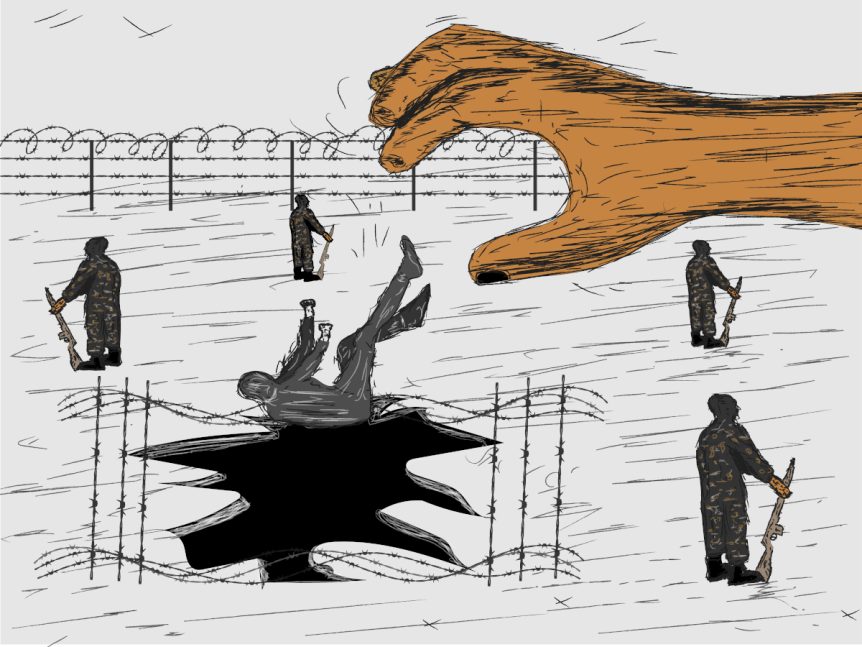
The Passage of Time Without Conclusive Proof: Does It Mean Death?
If the party responsible for the disappearance continues to claim that the person is still alive but provides no material evidence—such as recent recordings, official proof of life, or permission for contact—such claims remain legally insufficient. According to international standards, the absence of tangible evidence after many years renders the continuation of disappearance a presumption of death, allowing courts to issue a ruling of presumed death, particularly if the abducting party fails to provide any reliable information regarding the person’s fate.
The discovery of a body and DNA analysis constitute the most significant material evidence confirming the death of a forcibly disappeared person. DNA testing contributes to identifying victims, especially in cases of mass graves or attempts to conceal evidence. It also plays a central role in documenting crimes and holding perpetrators accountable, as it is recognized as strong legal evidence before international courts. Moreover, the presence of a body allows for the legal and humanitarian closure of the case, granting families the right to bury their loved ones with dignity and to claim compensation and official recognition of death.
There are numerous legal precedents in which the death of forcibly disappeared persons was declared after long periods without any evidence of their being alive. For example:
* Seror v. Turkey (1998) before the European Court of Human Rights, where the continuation of disappearance without proof of life was deemed a legal presumption of death.
* In Argentina, following the fall of the military dictatorship, courts issued rulings declaring the death of hundreds of disappeared persons during the “Dirty War” (1976–1983), despite the absence of their bodies.
* The International Criminal Tribunal for the former Yugoslavia relied, in cases related to the Srebrenica massacre (1995), on testimonies and human rights reports to declare the death of hundreds of missing persons, even without the recovery of all remains.
* In Iraq, courts issued rulings declaring the death of forcibly disappeared persons after more than 10 years without any evidence of their survival.
Prominent political figures have also been subjected to enforced disappearance, with their deaths legally declared after years of disappearance, such as:
* Raoul Wallenberg, the Swedish diplomat who disappeared in 1945 and whose death was officially declared by Sweden after 70 years.
* Mehdi Ben Barka, the Moroccan opposition figure abducted in Paris in 1965 and never found.
* Abdul Fattah Ismail, former President of South Yemen, who disappeared during the events of 1986 and was later declared dead.
* Imam Musa al-Sadr, who disappeared in Libya in 1978; despite ongoing controversy regarding his fate, many parties treat his case as an enforced disappearance that ended in death.
Who Has the Authority to Declare the Death of a Forcibly Disappeared Person
No individual or organization may declare the death of a forcibly disappeared person based on testimonies or sources that are not judicially documented, as this requires formal legal procedures. The only entities authorized to do so are national and international courts, after examining available evidence, such as the prolonged absence of any proof of life, official testimonies, or reliable reports. Declaring death without official proof may lead to manipulation of the truth, increased suffering for families, and obstruction of human rights efforts to uncover the truth.
Declaring the death of a forcibly disappeared person without reliable evidence or an official judicial ruling is not only an ethical error, but an irresponsible act that may destabilize the family and society. Such declarations may provide cover for perpetrators to evade accountability and obstruct efforts to seek the truth. Individuals and human rights organizations must exercise responsibility and caution, adhering to legal and humanitarian standards to ensure that the truth is revealed in a fair and just manner, free from speculation and politicization.
Enforced disappearance is not merely an individual crime, but a humanitarian and political tragedy that requires careful and responsible handling. The declaration of death for the disappeared must be based exclusively on clear legal procedures and documented evidence, not on speculation or unofficial sources, due to the grave legal and humanitarian consequences affecting the rights of victims and their families. As this phenomenon persists in Yemen, uncovering the fate of forcibly disappeared persons and holding those responsible accountable remains a human rights and humanitarian priority that tolerates no delay or manipulation. It also represents an explicit legal obligation under international human rights law, which guarantees families the right to truth, justice, and reparation, and affirms that the crime of enforced disappearance is a continuing violation that does not end except by revealing the fate of the disappeared and does not lapse with time under any circumstance.
End
