
Palestinians and the Land: An Ongoing Struggle for Survival in the Face of Displacement and Seizure
15/9/2026 – Union for Justice Foundation
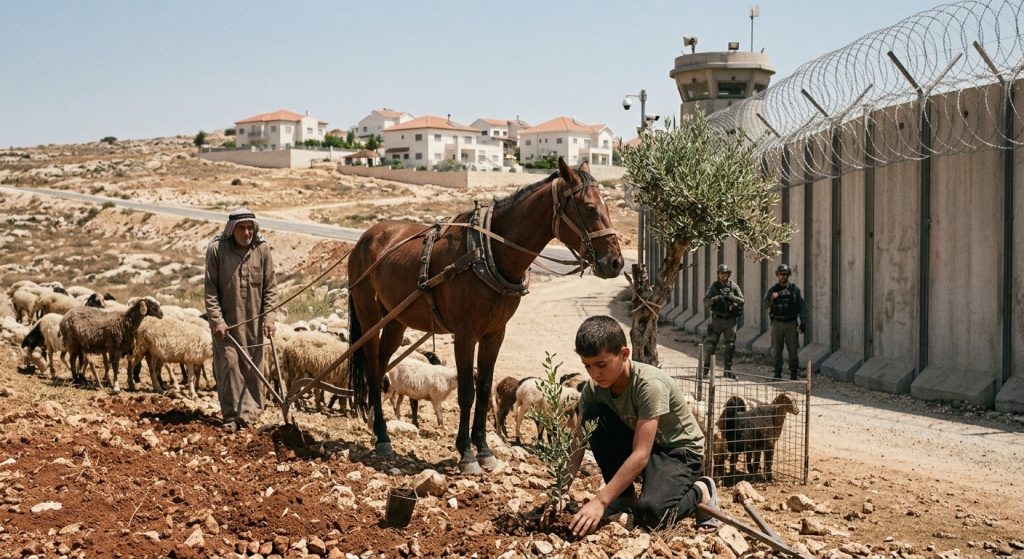
Palestinian land is not merely soil; it is the identity, roots, and history of the Palestinian people. For decades, Palestinians have lived on their land in a daily struggle for survival, amid ongoing attempts to displace them and seize their lands. In various areas, from the northern West Bank to the Jordan Valley, including Masafer Yatta, the land is being transformed from a source of livelihood and dignity into a real arena of confrontation, where farmers are prevented from plowing their land and deprived of their crops, while settlers are allowed to access the same land, cultivate it, and exploit it.
In the northern Jordan Valley and northern West Bank, this pattern is continuously repeated; lands on which Palestinians depend to feed their families and livestock are made inaccessible or their use is restricted, while settlers are able to cultivate and exploit them. This repeated restriction causes significant economic losses, threatens the food security of Palestinian families, and makes their daily lives fraught with danger and hardship.
In Masafer Yatta, where villages and Bedouin communities extend among rocky terrain and agricultural lands, residents live each day in an open confrontation with settlers and the occupation army over land that represents their primary source of livelihood. The area’s residents have long depended on agriculture and livestock herding, but these activities have increasingly faced restrictions that threaten their ability to remain and maintain their connection to their land.
Settlers prevent farmers from accessing and plowing their lands and pursue them when they approach them, while themselves plowing, cultivating, and exploiting the land. In many cases, the army intervenes to settle the situation in favor of the settlers by declaring the land a closed military zone and forcing farmers to leave it, and even confiscating tractors or their keys and arresting those who attempt to carry out their work on their land.
In this way, the land is transformed from a space for livelihood and production into an area forbidden to its owners, despite the fact that it represents the lifeline of families that depend on it to provide food for their livestock, which in turn constitute a primary source of their livelihood.
The attacks have not stopped at preventing farmers from accessing their lands. Settlers continue to uproot olive trees, including uprooting them from their roots, in an assault that targets not only an economic source but also the residents’ memory of and connection to their land. For the people of Masafer, the olive tree is not merely a tree; it is part of their history, memory, and life extending across this land.
The attacks also include stealing wheat seeds on which farmers depend to begin their agricultural seasons, and preventing them from carrying out the most basic activities connected to their land, including plowing it and harvesting its crops.
These repeated attacks disrupt the lives of residents and deepen their suffering, particularly because a large number of Bedouin families depend primarily on the land to provide food for their livestock, which constitute their source of livelihood. With every tree that is uprooted and every agricultural season that is looted or disrupted, the economic and livelihood burden on these families increases, while their determination to remain on their land continues.
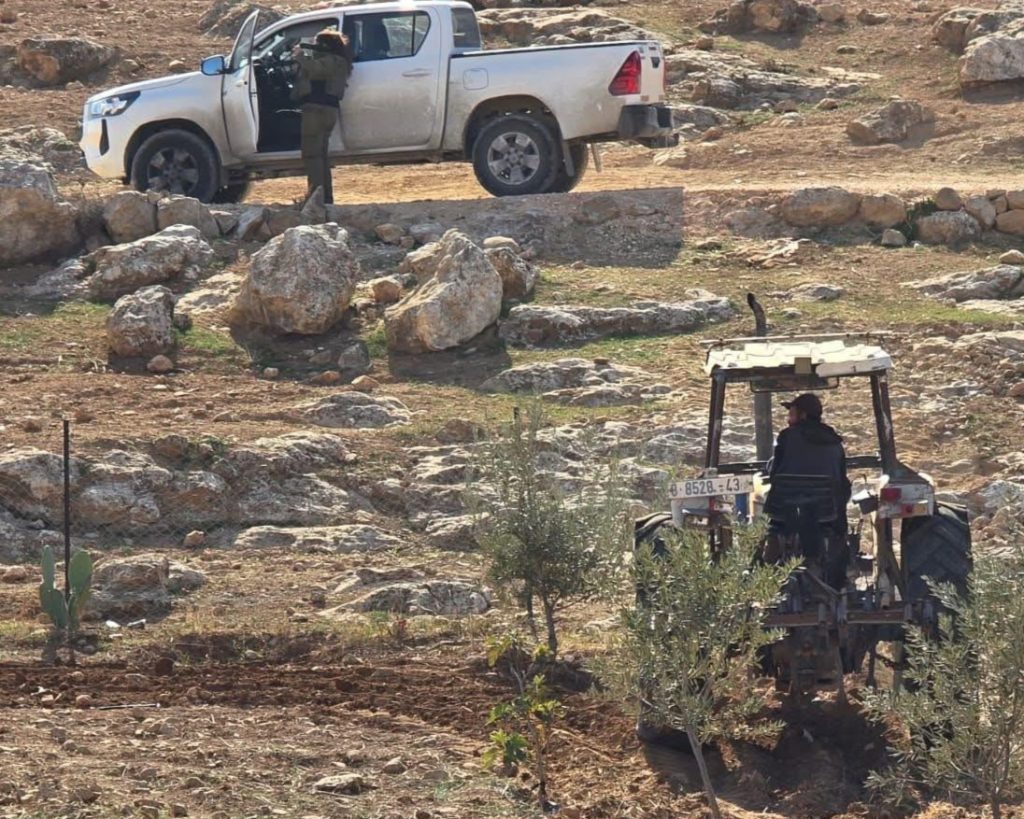
Despite repeated attempts to uproot them, the residents of Masafer Yatta continue to hold on to their land and return to it and carry out whatever agricultural and pastoral activities they can. They protect what remains of their trees and crops and continue to cultivate their land, recognizing that the land is not merely a place of residence, but an essential part of their identity, existence, and means of survival.
Masafer Yatta is under siege, yes, but its people do not break. A person’s connection to their land, and to what they have built upon it over generations, makes defending it a defense of their livelihood, dignity, identity, and right to remain.
From the perspective of international humanitarian law, what is taking place in the occupied Palestinian territory, particularly in Masafer Yatta, raises serious violations of the obligations imposed on the occupying power toward the civilian population and their property. The Fourth Geneva Convention requires the occupying power to respect and protect the civilian population, prohibit attacks against their property, and ensure their humane treatment, as well as imposing obligations concerning the protection of the population and their essential interests in the occupied territory.
Preventing farmers from accessing their lands, seizing and exploiting land by force, uprooting trees, attacking residents, and obstructing their sources of livelihood also affect a range of fundamental rights, including the right to property, the right to work and earn a livelihood, the right to an adequate standard of living, as well as the right of residents to remain in their places of residence and not be unlawfully forced to leave them.
The occupying power bears the responsibility to respect its obligations under international law, take the necessary measures to prevent attacks against the Palestinian population and their property, investigate violations and hold those responsible accountable, and not allow the use of force or threats of force to impose a new reality on the ground.
The continuation of these practices does not constitute merely separate attacks against farmers or property, but occurs within a context that threatens Palestinians’ ability to access their lands, carry out their normal lives, preserve their sources of livelihood, and remain there. Therefore, protecting the land and the Palestinian population requires a clear and effective international position that ensures respect for the rules of international law, puts an end to the attacks, protects civilians and their property, and prevents any measures aimed at imposing displacement or changing the existing reality on the ground by force.
End
