
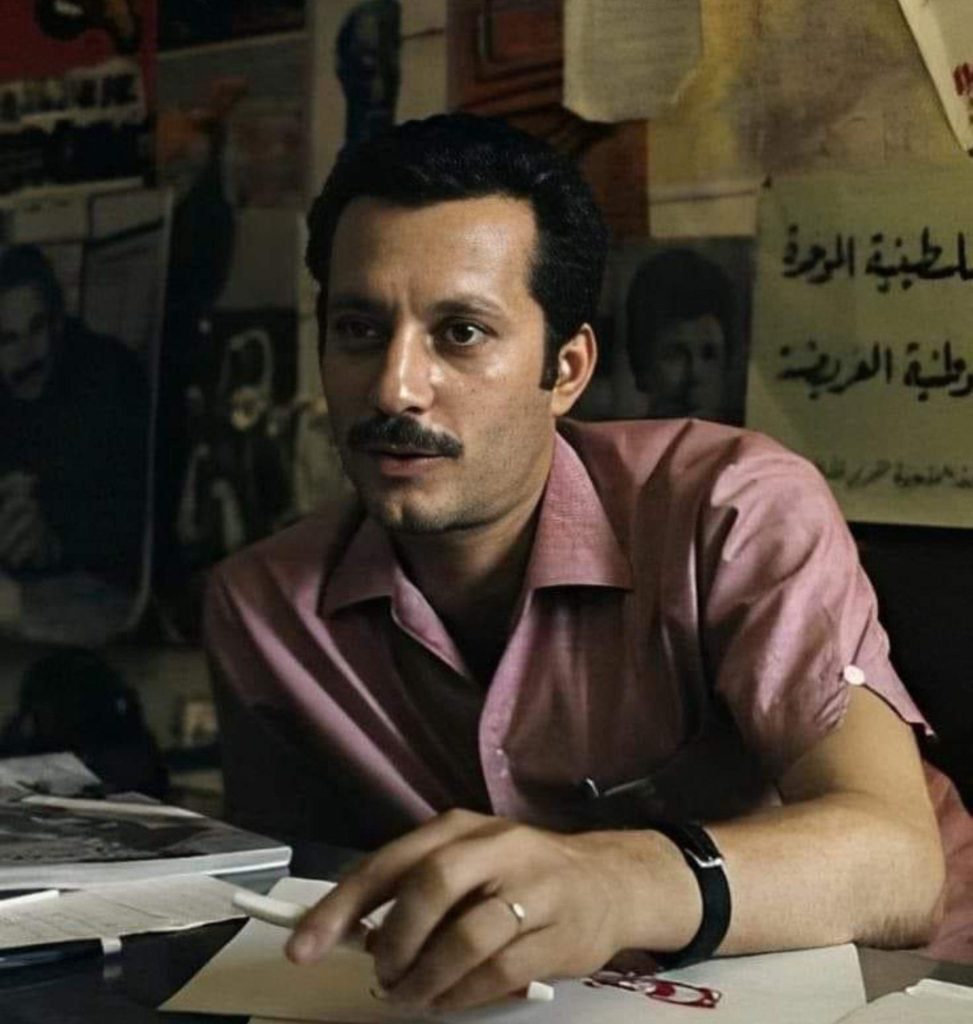
Ghassan Kanafani: Literature as a Human Rights Testimony to the Nakba, Dispossession, and Palestinian Refugehood
13/08/2026 – Union for Justice Foundation
Ghassan Kanafani (1936–1972) was one of the most prominent Palestinian writers and intellectuals of the twentieth century. His name became closely associated with the Palestinian cause, making him one of the most important voices to express the suffering of the Palestinian people and their national aspirations.
Kanafani combined literary writing, journalism, and intellectual activity. Through his novels, short stories, and articles, he succeeded in conveying the Palestinian experience from its local context into a broader human space, making his works a reference for understanding the consequences of refugeedom, dispossession, and the loss of homeland. His significance did not rest solely on direct political activity, but also on his exceptional ability to transform literature into a means of defending rights, memory, and identity. This made him a cultural symbol of the Palestinian struggle and a global voice for refugees.
Kanafani’s experience cannot be understood separately from the 1948 Nakba, which resulted in the displacement of hundreds of thousands of Palestinians from their cities and villages and turned them into refugees inside and outside Palestine. Kanafani experienced this reality firsthand, as he was forced to leave his hometown of Acre with his family at an early age. These events marked a turning point in his life. For him, the Nakba was not merely a historical event, but an ongoing human experience that left its mark on the individual and collective consciousness of Palestinians. Consequently, the issue of refugeedom and the loss of homeland became a central theme of his literary and intellectual project.
From Personal Experience to National Consciousness
Ghassan Kanafani’s consciousness was shaped by the experience of refugeedom that he lived through from childhood following the 1948 Nakba, when he was forced to leave his hometown of Acre with his family and enter a life of exile. This experience was not merely a geographical movement from one place to another; rather, it constituted a profound transformation in his understanding of the world and of the meaning of homeland and belonging. Like thousands of Palestinians, Kanafani experienced dispossession and the loss of stability, and witnessed firsthand the human consequences of displacement for individuals and families. This led him to realize at an early age that the Palestinian cause was not a passing event, but a collective experience that had reshaped the lives of an entire people.
As he grew older, this personal experience developed into a deeper national and political consciousness. He came to understand that the suffering of refugees was not limited to the loss of homes and land, but extended to threats to identity, memory, and belonging. He therefore began to view literature and culture as means of preserving the Palestinian narrative and defending national rights. This awareness was reflected throughout his works, which sought to connect individual experiences with the collective fate and to present the Palestinian cause as the cause of a people seeking to reclaim its right to its homeland, dignity, and history. Through this process, Kanafani evolved from a refugee living with the consequences of the Nakba into one of the most prominent voices expressing Palestinian national consciousness in the twentieth century.
Ghassan Kanafani was distinguished by his ability to employ literature in service of the national cause without compromising the artistic and human value of his works. In his novels and short stories, he portrayed characters living with the consequences of refugeedom, displacement, and waiting, while confronting questions of identity, belonging, and the future. His writings were not merely a record of events, but an attempt to understand the psychological and social transformations imposed by the Nakba on Palestinians. Through this role, literature became a means of preserving collective memory and preventing its loss in the face of attempts at marginalization or erasure.
One of the most important characteristics of Ghassan Kanafani’s work was his refusal to portray the Palestinian refugee as a passive victim waiting for assistance or living on the margins of history. He sought instead to portray the refugee as a human being possessing agency and the ability to act and influence events, despite the dispossession and deprivation to which he had been subjected. Accordingly, his literary characters did not focus solely on suffering, but also on how to confront that suffering and seek ways to preserve dignity and identity under harsh conditions of refugeedom.
This vision was connected to Kanafani’s conviction that refugeedom should not become a permanent state of surrender or loss of hope, but rather a motivation to hold firmly to national rights and collective memory. His characters therefore often appear attempting to move beyond the position of victim by seeking to reclaim their role in shaping their future and defending their right to return and belong. In this way, Kanafani contributed to redefining the image of the refugee in Arabic literature, so that the refugee was no longer merely a symbol of suffering, but also a symbol of steadfastness, resistance, and determination not to relinquish rights, regardless of how long refugeedom lasted or how complicated the political circumstances became.
Journalism and Advocacy for the Palestinian Cause
Alongside his literary role, Ghassan Kanafani emerged as a journalist and political analyst who played a central role in raising awareness of the Palestinian cause and defending it in intellectual and media circles. He believed that the struggle was waged not only on the political and military fronts, but also through words and public opinion, where perceptions and attitudes toward just causes are formed. From this perspective, he used journalism as a means of conveying the Palestinian narrative to Arab and international audiences, highlighting the suffering of refugees, the consequences of displacement, and the Palestinian people’s right to self-determination.
His journalistic writings were not limited to following daily events. They were characterized by a high degree of analysis and by connecting the Palestinian cause to broader regional and international contexts. He sought to deconstruct narratives that marginalized Palestinian rights or reduced the cause to narrow political dimensions, emphasizing that its essence was connected to questions of justice, freedom, and the rights of peoples. His articles and studies also contributed to building political and cultural awareness among generations of readers and made journalism a tool for defending national memory and confronting attempts to suppress or distort the Palestinian narrative.
Through this role, Kanafani was not merely a journalist reporting the news, but an intellectual deeply engaged in the concerns of his people, using words as a means of intellectual resistance and preserving historical rights. For this reason, his journalistic writings constituted an essential part of his legacy and contributed to establishing his position as one of the most prominent voices to articulate the Palestinian cause in the twentieth century.
Ghassan Kanafani’s thought carries clear human-rights dimensions, particularly with regard to the Palestinian refugee issue. His writings emphasized that forced displacement was not merely a humanitarian tragedy, but was connected to fundamental legal and political rights, foremost among them the right to return to one’s homeland. From this perspective, many of his works can be read as a defense of peoples’ right to preserve their identity, land, and collective memory. His writings also contributed to highlighting the human dimension of the Palestinian cause and linking it to principles of justice and human rights that are supposed to underpin the international order.
From Palestinian Literature to the Global Discourse on Refugeedom
Ghassan Kanafani left behind a literary and intellectual legacy that transcended the boundaries of Palestine and the Arab world. His works have been translated into numerous languages and have become part of global literature addressing issues of refugeedom, identity, and justice. His writings introduced generations of readers to the Palestinian experience from a deeply human perspective, beyond statistics and abstract political discourse. They also influenced numerous writers and researchers who addressed issues of exile, dispossession, and collective memory, making him one of the most prominent and influential Palestinian voices on the global stage.
The experience of Ghassan Kanafani demonstrates that the struggle for rights is not limited to political or military action, but can also take a cultural and intellectual form capable of profoundly influencing human consciousness. He succeeded in transforming literature and journalism into tools for defending the Palestinian cause and linking the suffering of refugees to broader questions concerning justice, identity, and human dignity. Through his works, he did not portray the Palestinian merely as a victim, but as a human being who holds firmly to the right to memory, homeland, and future.
In this context, Ghassan Kanafani’s legacy remains relevant because it reminds us that just causes do not live only in the arenas of politics, but also in the books, stories, and collective memory of peoples. His influence therefore extends beyond Palestinian literature to every discussion concerning refugeedom, dispossession, and the right of human beings to preserve their identity and dignity, regardless of how much time passes or how complicated political circumstances become.
End
