
23/05/2026 – Union for Justice Foundation
The issue of Palestinian prisoners in Israeli occupation prisons represents one of the most glaring manifestations of the comprehensive war of extermination and the ongoing colonial erasure operations carried out against the Palestinian people. Briefings issued by the Palestinian Commission of Detainees and Ex-Detainees Affairs, the Palestinian Prisoners’ Club, the Union for Justice Foundation, and human rights organizations have exposed the tragic reality in which thousands of prisoners face an integrated system of systematic torture and deliberate starvation. What is taking place inside the cells and camps is not merely a set of security measures, but rather a systematic destruction of both body and spirit, carried out by heavily armed special units aimed at breaking the will of the Palestinian prisoner through an unprecedented escalation of repression operations from which no prisoner has been spared, leaving behind severe injuries and permanent disabilities, particularly rib fractures resulting from violent assaults.
The policy of “slow execution” has emerged as one of the most dangerous tools employed, as thousands of prisoners are deprived of their right to medical treatment and healthcare, leading to the spread of epidemics and contagious skin diseases, foremost among them scabies, which has become an instrument of torture devouring prisoners’ bodies amid the absence of hygiene and severe overcrowding. This policy is accompanied by the systematic crime of starvation, which has turned prisoners’ bodies into living testimonies to the humanitarian catastrophe. The occupation authorities provide extremely meager meals that are barely sufficient to sustain life, causing drastic weight loss, severe emaciation, and weakened immunity, especially among prisoners suffering from chronic illnesses such as cancer and multiple sclerosis, who face the threat of death at every moment.
This brutality extends to the most vulnerable groups. Female prisoners in Damon Prison are subjected to daily abuse, including raids on their rooms during the early hours of dawn, the use of tear gas, severe beatings, and deprivation of essential personal necessities as a tool of humiliation and oppression. Child prisoners face the same tragic reality without any regard for their age, as they are deprived of family visits and the most basic human rights under harsh detention conditions that leave imprisoned children longing for a single piece of candy — a testimony reflecting the magnitude of deprivation and suffering inside the prisons.
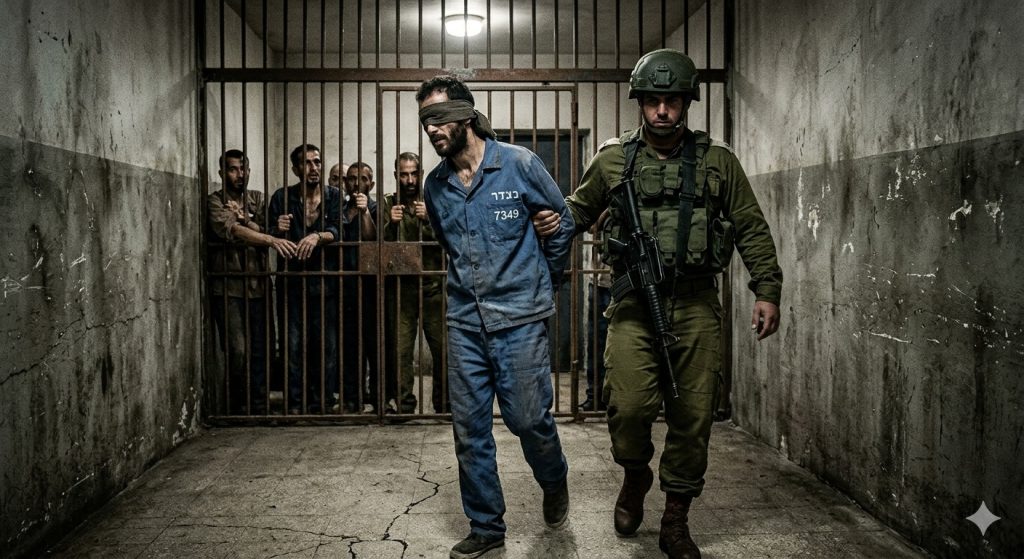
In camps such as Gilad and Sde Teiman, torture practices reach sadistic levels. In Gilad, cell windows are deliberately left open, allowing rainwater to seep onto prisoners’ mattresses during freezing weather, while detainees in Sde Teiman are forced to wear bracelets bearing numbers instead of names in an attempt to erase their human identity. Gaza detainees in these camps live under conditions of enforced disappearance and relentless torture, where they are deprived of sleep for long hours, forced to sit in painful positions with their heads lowered, and subjected to threats and beatings before lawyer visits in order to intimidate them and prevent them from testifying about the abuses they endure. In light of this grim reality, human rights organizations place the international community before its legal and moral responsibilities, calling for the activation of universal jurisdiction to prosecute those involved in these crimes and for the suspension of diplomatic and military cooperation with the occupation until it complies with international law. These demands also stress the immediate release of political prisoners, an end to the policy of administrative detention, and the dismantling of the military court system, while calling for the immediate access of the International Committee of the Red Cross to prisons and camps in order to examine the catastrophic conditions endured by prisoners and put an end to the ongoing crimes committed against them.
Methods of Torture Practiced in the “Gilad” Camp
The Gilad camp, affiliated with the occupation army within Ofer Prison, represents a stark example of the horrific levels of systematic torture inflicted upon Palestinian detainees. The occupation authorities have transformed daily procedures and natural conditions into tools of physical and psychological abuse within an integrated system designed to crush the prisoner’s will.
Methods of direct physical torture in the camp include severe beatings and electric shocks, in addition to depriving detainees of the minimum necessities of life and systematically implementing deliberate humiliation policies. The camp administration also exploits harsh weather conditions as an additional means of torture by intentionally keeping cell windows permanently open, causing rainwater to leak inside and soak prisoners’ mattresses and blankets, which are already damp, while prisoners are denied any alternatives or means of heating.
The camp administration further pursues punitive practices by confiscating blankets and mattresses daily from six o’clock in the morning until the evening hours, leaving prisoners exposed to freezing cold throughout the day. Prisoners are also forced to shower with cold water during the harsh winter season, constituting a blatant violation of humanitarian and health standards.
This suffering is exacerbated by severe overcrowding inside the cells, where approximately eleven prisoners are confined in a single cell containing only four metal bunks. As a result, some prisoners are forced to sleep on rain-soaked floors, while others crowd together on the available bunks to escape the wet ground and extreme cold, transforming the cell into a space of continuous physical and psychological torment.
Repressive Measures Imposed on Female Prisoners in “Damon”
Palestinian female prisoners in Damon Prison have been subjected to a series of systematic repressive and abusive measures carried out by occupation suppression units. These measures included direct physical assaults, as forces stormed the rooms, used tear gas, forced the prisoners to lie on the ground, severely beat them, and directed obscene insults at them under the pretext of searching for “inciting” phrases.
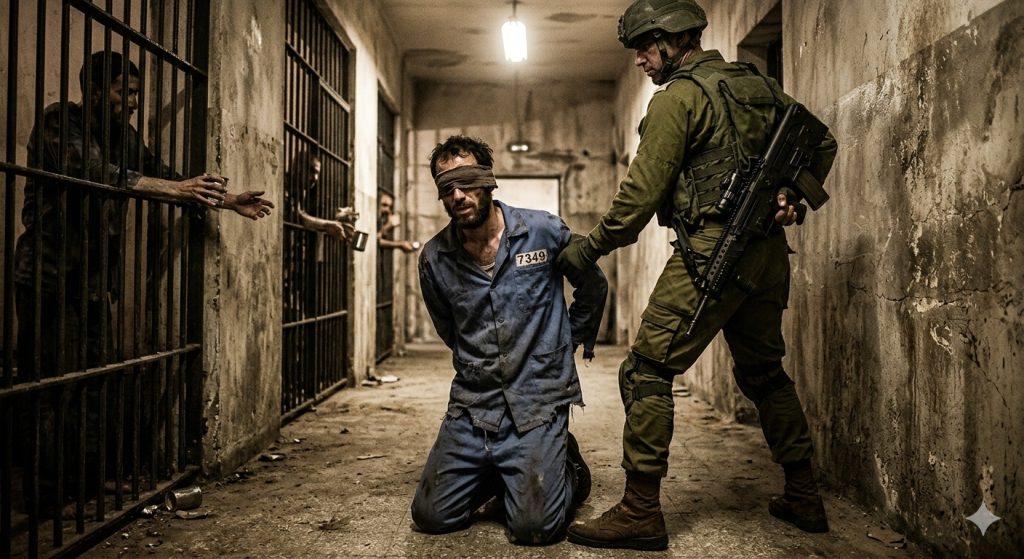
In another escalation, prison forces raided the prisoners’ rooms, handcuffed them behind their backs, blindfolded them, and transferred them to the prison yard during severe cold weather. During this process, the prisoners were forced to kneel with their heads lowered for several hours while police dogs and stun grenades were used against them. The prison administration also deliberately documented the repression operations and the extensive destruction of prisoners’ belongings inside their rooms.
In addition to physical abuse, the prison administration imposed collective punishments, including locking prisoners inside their rooms and depriving them of the daily outdoor break, alongside the continuation of the systematic starvation policy and the denial of medical treatment and healthcare, particularly for prisoners suffering from chronic illnesses such as cancer. This suffering intensifies during the winter season due to the severe shortage of blankets, clothing, and heating supplies, turning the cold itself into an additional tool of torture.
Practices of deliberate humiliation are further reflected in the deprivation of essential personal necessities, most notably sanitary pads, which the prison system uses as an additional instrument of oppression and an assault on the human dignity of female prisoners. These measures form part of an integrated system aimed at physically and psychologically destroying female prisoners and completely isolating them from the outside world, including depriving them of family and Red Cross visits.
The Prison Administration’s Use of Winter as a Tool for Torturing Prisoners
The occupation’s policy of exploiting winter may be likened to an “icy guillotine” that not only severs the prisoner’s connection with the outside world, but also silently tears apart the prisoner’s body with cold brutality, transforming air and rain — symbols of life — into instruments of slow death surrounding the prison cells from every direction. With the arrival of winter, climatic conditions inside Israeli occupation prisons and camps are transformed from a natural challenge into a lethal weapon within a system of “systematic torture” targeting thousands of Palestinian prisoners.
In the Gilad camp affiliated with Ofer Prison, the occupier’s sadism is reflected in the deliberate practice of keeping cell windows wide open, allowing rainwater to flood into the cells and soak mattresses and blankets already saturated with moisture. The administration further confiscates all blankets and mattresses from six in the morning until evening, leaving prisoners to confront freezing temperatures without alternatives, forcing them to crowd together on a few metal bunks to escape the wet ground and deadly cold, in addition to compelling them to shower with cold water during the peak of winter.
This systematic policy is repeated in Ramla Prison (Rakafet Section), where detainees are stripped of their mattresses and blankets from four in the morning until eleven at night, forcing them to spend their days lying on cold metal surfaces or the bare floor in the total absence of heating or adequate winter clothing. These practices make no distinction between categories of prisoners, as female prisoners in Damon Prison and child prisoners face similar conditions of systematic deprivation that intensify their physical and psychological suffering and transform winter into a continuous daily nightmare.
The use of winter as a tool extends beyond physical cold to act as a catalyst for disease and epidemics. Under the policy of “slow execution,” extreme cold exacerbates the suffering of prisoners with rib fractures, pelvic fractures, and shoulder dislocations resulting from ongoing abuse. The lack of clean clothing and high levels of humidity further worsen the spread of scabies, which consumes prisoners’ bodies, turning them into pus-filled sores. Prisoners are deprived of adequate medical treatment and clothing that can protect them from the disease’s complications amid the freezing conditions.
Cold is also used as an instrument of collective punishment during nighttime repression operations, as occurred with female prisoners in Damon Prison, who were taken into outdoor yards during the early dawn hours wearing light clothing in severe cold conditions and forced to kneel for several hours with their hands restrained and eyes blindfolded under the threat of police dogs. This deliberate exploitation of the cruelty of nature is intended to break prisoners’ morale and destroy their physical being, requiring urgent international intervention to halt these crimes and provide legal and humanitarian protection for prisoners.
Human Rights Organizations’ Demands to Address Crimes Against Prisoners
The demands of human rights organizations revolve around halting the “war of extermination” and systematic torture crimes. These demands are based on activating international legal and diplomatic mechanisms to hold the occupation accountable and can be summarized as follows:
– Judicial prosecution and international accountability: This includes activating universal jurisdiction by demanding the prosecution of all individuals involved in torture, war crimes, and crimes against humanity committed against prisoners; cooperating with the International Criminal Court through full support for the Court’s investigations and efforts to implement arrest warrants issued against those responsible for international crimes against prisoners; and conducting independent and impartial investigations into all cases of torture and deaths occurring inside prisons and camps.
– Diplomatic and economic pressure: Human rights organizations call upon states and the international community to suspend diplomatic, military, and economic cooperation with the occupation as a means of pressure until it fully complies with international law.
– Legal rights and measures related to the detention system: These include the immediate and unconditional release of all Palestinian political prisoners as part of confronting the war of extermination; ending the policy of administrative detention and halting this practice carried out without charge or trial; and dismantling the military court system, which is used as a tool within the broader system of repression against Palestinians and lacks the foundations of justice.
– International monitoring and visits: This includes the immediate authorization for international legal and humanitarian organizations, as well as the International Committee of the Red Cross, to visit prisoners and detainees — including Gaza detainees who have been denied visits since the beginning of the war — in order to examine their catastrophic detention conditions and halt the crime of enforced disappearance. These demands constitute a legal outcry aimed at breaking the state of “savagery” practiced within the prison system. Through them, human rights organizations seek to transform the prisoners’ issue from an internal matter of the occupation into an urgent issue of international justice and to transform international law from theoretical texts into effective instruments of pressure capable of protecting prisoners’ lives.
End
