
29/04/2026 – Union for Justice Foundation
The village of Jalud, situated on the southeastern hills of the city of Nablus, stands as a stark model of Palestinian resilience in the face of forced displacement policies monitored and documented with deep concern by the Union for Justice Foundation. Rising approximately 790 meters above sea level, the village overlooks the slopes of the Jordan Valley from a strategically significant location. Historically, Jalud has been known for the fertility of its agricultural lands and its abundant production of olives and wheat. However, this historical legacy is now under suffocating siege imposed by ten settlements and outposts that encroach upon more than eighty percent of the village’s land, transforming it into an isolated population enclave suffering from ongoing restrictions aimed at severing the bond between people and their land and uprooting Palestinian roots from this vital area.
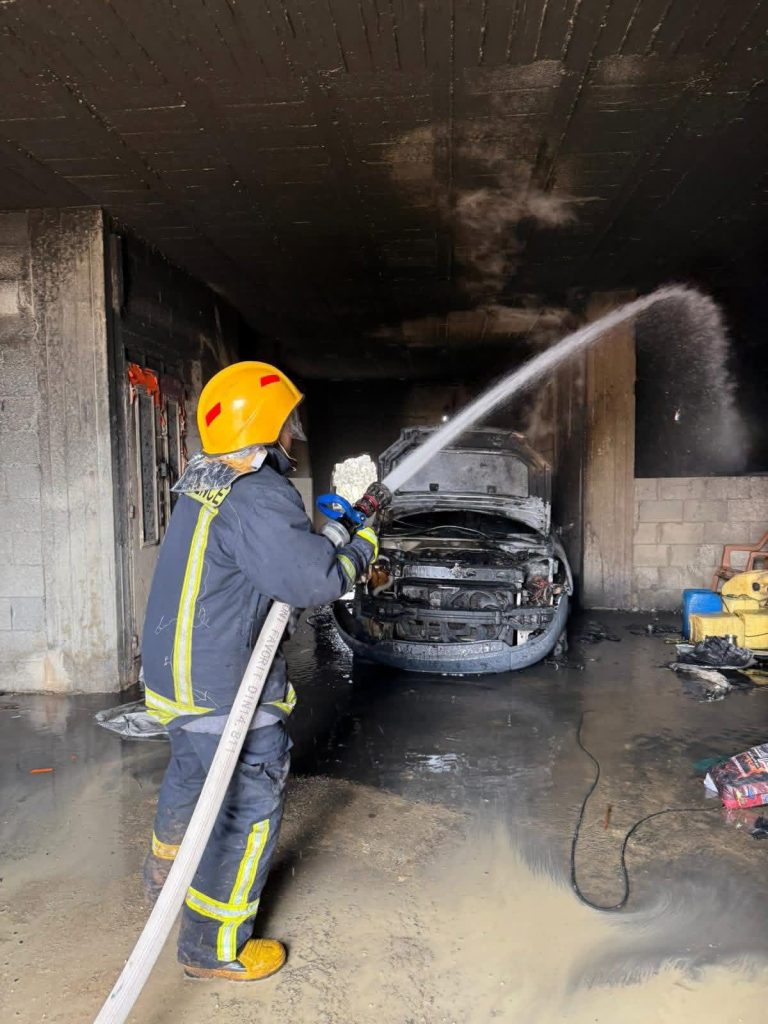
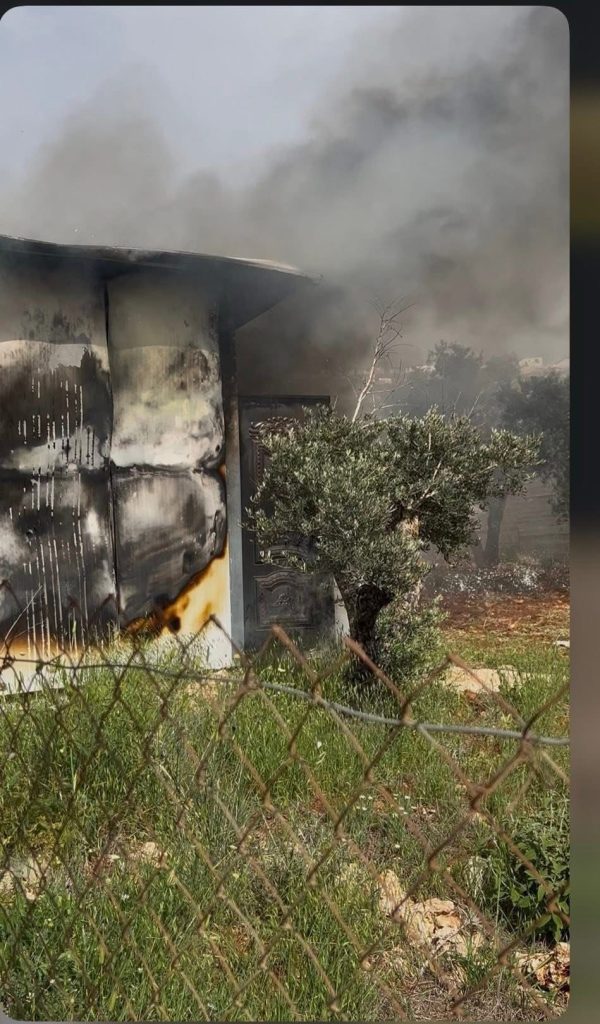
Field monitoring conducted by the Union for Justice Foundation indicates that, on the evening of Monday, April 27, 2026, Jalud was subjected to one of the most violent and deadly terrorist attacks in its recent history. Large groups of armed settlers stormed the village’s neighborhoods under direct and intensive protection from occupying forces. The attackers carried out brutal assaults, including the deliberate burning of inhabited homes, causing widespread panic among families and children who found themselves surrounded by flames and tear gas. In a tragic scene, one family was trapped inside their home as it was engulfed by fire, while residents made strenuous efforts to rescue them, initially without success due to the intensity of the fire and the scale of the attack.
The destruction extended beyond buildings to include the burning of private vehicles and the destruction of agricultural property, in a clear attempt to undermine the foundations of a dignified life and to force residents into a silent, coerced displacement under systematic terror and intimidation. The Union for Justice Foundation affirms, through its documentation of this assault, that occupying forces did not merely provide cover for the settlers but also prevented civil defense teams and rescue crews from entering the village to extinguish the fires and assist trapped families. They were only allowed entry after it was too late, after which the forces stormed the village and arrested several members of the devastated families.
The Foundation further stresses that occupying forces actively participated in suppressing unarmed civilians who attempted to defend their homes. Tear gas canisters and live ammunition were fired heavily, resulting in dozens of injuries due to suffocation and severe beatings with batons and rifle butts. This dangerous escalation constitutes a direct manifestation of a scorched-earth policy, whereby roles are exchanged between the military and settlers to tighten control over what remains of the village’s land and to expand the influence of surrounding pastoral outposts. Such actions represent a blatant violation of all international norms and conventions that mandate the protection of civilians under occupation.
From the perspective of international humanitarian law, the Union for Justice Foundation reiterates that these acts can only be classified as fully constituted war crimes. The Fourth Geneva Convention clearly stipulates the protection of private property and the inviolability of homes—provisions that are being violated daily in Jalud. The deliberate inaction of the occupying authorities to restrain settler attacks, and their official support thereof, demonstrates their complicity in entrenching a system of apartheid and racial segregation. This necessitates urgent international action by the International Criminal Court to hold the perpetrators of these crimes, as well as their leaders, accountable. The Foundation concludes its report by emphasizing the urgent need to provide immediate international protection for the residents of Jalud, warning that continued international silence constitutes a green light for the persistence of these violations, which threaten peace and security in the region as a whole.
End
