
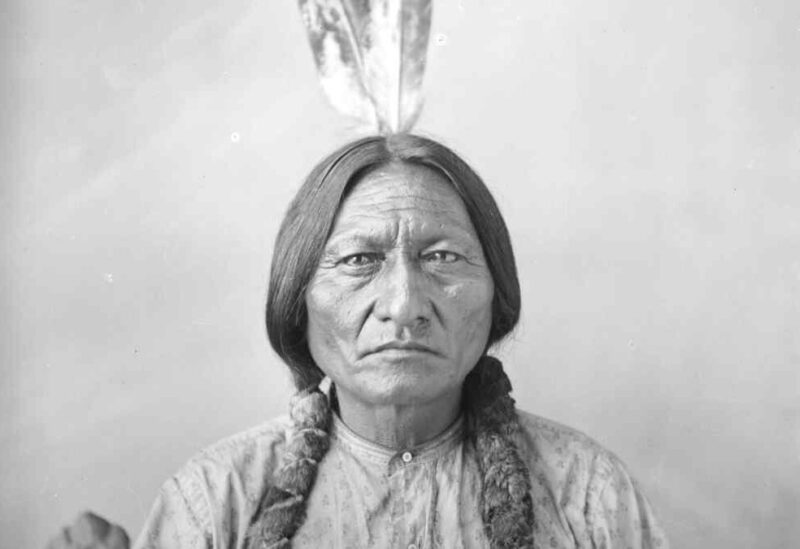
Sitting Bull: Defending Land and Identity in the Face of American Expansion
2026/09/18 – Union for Justice Foundation
Sitting Bull, known in the Lakota language as Tatanka Iyotanka, is considered one of the most prominent historical leaders of the Lakota people, one of the peoples of the Sioux, and one of the most well-known figures associated with resistance to the expansion of the United States into Indigenous peoples’ territories during the nineteenth century.
Sitting Bull was born in what is now the state of South Dakota and grew up in a Lakota community whose life was closely connected to the land, hunting, social relations, and cultural and spiritual traditions. As American expansion into Indigenous peoples’ territories intensified, he became one of the most prominent opponents of policies that sought to subjugate Lakota groups, relocate them to reservations, and impose new ways of life upon them. He combined political, spiritual, and leadership roles, and later became one of the most prominent historical symbols of the defense of land and the preservation of his people’s way of life.
The significance of Sitting Bull is not limited to military confrontations, but also lies in the questions his life came to represent concerning land, identity, sovereignty, and collective rights—issues that have acquired a clear place within the framework of Indigenous peoples’ rights in contemporary international law.
American Expansion and the Loss of Land
The nineteenth century witnessed the rapid expansion of the United States westward, which led to repeated conflicts with Indigenous peoples who inhabited those regions and practiced different ways of life, economies, and patterns of mobility. Land was a central issue in this conflict. The U.S. government sought to conclude treaties with groups of Indigenous peoples, which in many cases included defining areas designated for residence and relinquishing other areas of land, while the influx of settlers and those seeking natural resources intensified disputes over land, resources, and travel and hunting routes.
In the case of the Lakota, the Black Hills were of particular importance, not only in terms of livelihood, but also because of their spiritual and cultural significance to the people. The Fort Laramie Treaty of 1868 recognized the Black Hills as part of the Great Sioux Reservation and provided for the area to be set aside for the use and occupation of the peoples covered by the treaty.
However, the discovery of gold in the area in 1874 led to an influx of prospectors and settlers, despite the fact that this conflicted with the arrangements stipulated in the treaty. Pressure on the U.S. government and the Lakota concerning the future of the area intensified, before the U.S. government took the Black Hills in 1877. The legal dispute over the Black Hills remains present in the legal history of relations between the United States and the Sioux people.
Sitting Bull was not among the leaders who participated in negotiating the Fort Laramie Treaty of 1868, and he refused to participate in the negotiations concerning it. Following the treaty, he remained with groups of Lakota who rejected relocation to reservations and settlement under the system imposed by the U.S. government.
Historical records indicate that some Lakota accepted the treaty and moved to the reservation, while other groups, including Sitting Bull’s followers, rejected adherence to the reservation system and continued their traditional ways of life. Here, the broader dimension of Sitting Bull’s position becomes apparent; the issue was not merely a dispute over an area of land, but was connected to the ability of an entire community to continue living according to its traditions and its relationship with its land and resources.
The Fort Laramie Treaty: The Legal Dimension of the Land Dispute
The Fort Laramie Treaty of 1868 is of particular importance when examining Sitting Bull’s experience from a legal perspective. The treaty recognized the Black Hills as part of the Great Sioux Reservation and provided that the area was to be set aside for the use and occupation of the peoples covered by it. It also included provisions concerning lands outside the reservation and hunting and travel rights. The treaty further provided that certain areas of the unceded territory were to be regarded as Indian lands and that unauthorized persons were not to be permitted to settle there without the consent of the peoples concerned.
However, the discovery of gold in the Black Hills led to the entry of prospectors into the area and an escalation of the confrontation between the U.S. government and the Lakota. The U.S. National Archives describes this development as a violation of the arrangements established by the 1868 treaty, before the U.S. government took the Black Hills in 1877.
These events demonstrate the importance of respecting agreements concluded with Indigenous peoples, an issue that has become linked in contemporary international law to principles concerning respect for Indigenous peoples’ rights, lands, resources, and institutions.
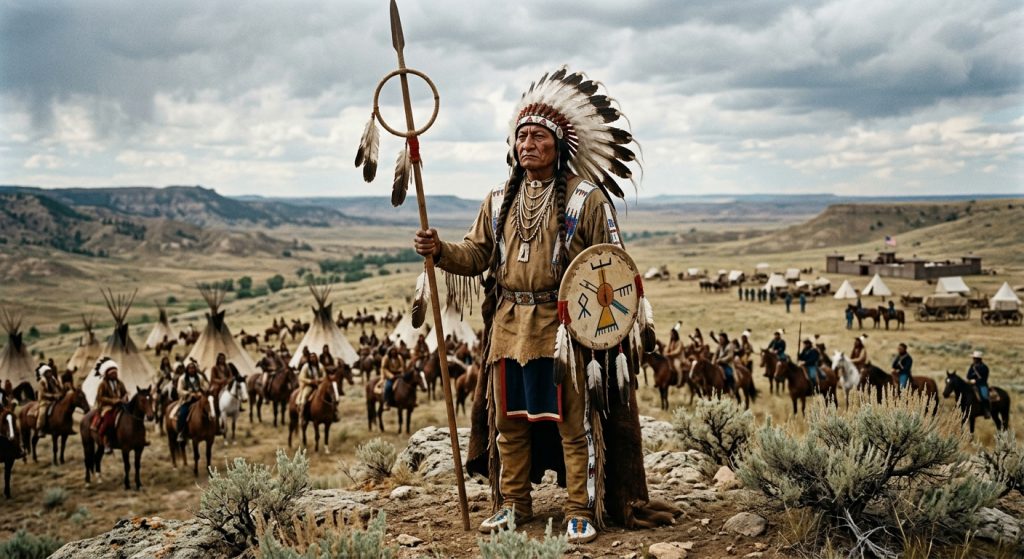
Sitting Bull’s name became closely associated with the Battle of the Little Bighorn, which took place on June 25 and 26, 1876, in what is now the state of Montana. The battle was part of a broader U.S. military campaign aimed at subjugating groups of Lakota and Northern Cheyenne who were not complying with the reservation system. U.S. forces confronted fighters from the Lakota, Cheyenne, and Arapaho, and the battle ended with the defeat of Colonel George Armstrong Custer’s forces.
Sitting Bull was an important political and spiritual leader in this context; however, attributing the military victory to him alone does not reflect the nature of the events. A number of Lakota and Cheyenne leaders and fighters participated in the confrontation, and Crazy Horse was among the most prominent military leaders associated with it.
Nevertheless, the battle later became a historical symbol of the resistance waged by Indigenous peoples against U.S. military campaigns aimed at imposing the reservation system and controlling their lands.
Land Is Not Merely Property
The experience of the Lakota demonstrates that the relationship with land cannot always be reduced to the concept of individual ownership or economic value. For Indigenous communities, land may be connected to identity, memory, traditions, religious and cultural practices, sources of food, and social relations. Therefore, the loss of land may have consequences extending beyond the loss of an economic resource, reaching the ability to preserve culture, language, and ways of life.
This issue is clearly reflected in the significance of the Black Hills to the Sioux people, whose sacred importance has also been recognized by U.S. historical sources. From this perspective, Sitting Bull’s resistance can be understood as part of a broader defense of a community that sought to preserve its relationship with its land and way of life, rather than merely as a military confrontation separate from its social and cultural context.
When addressing Sitting Bull, it is important to distinguish between the law that existed in the nineteenth century and the rules and principles concerning Indigenous peoples’ rights that developed in international law during the twentieth and twenty-first centuries.
In the modern era, the rights of Indigenous peoples have become part of the international human rights framework. One of the most prominent documents in this field is the United Nations Declaration on the Rights of Indigenous Peoples of 2007.
The Declaration recognizes the right of Indigenous peoples to self-determination and to maintain their institutions, cultures, languages, and traditions. It also addresses their rights to lands, territories, and resources with which they have traditionally been connected. It further emphasizes the importance of their participation in decisions affecting their lives and communities.
The Declaration also provides for the right of Indigenous peoples to revitalize their languages and traditions and to transmit their history and heritage to future generations, reflecting the development of international law in recognizing the importance of the cultural identity of Indigenous peoples.
This does not mean that these rules existed in the same form during Sitting Bull’s time; rather, subsequent legal developments demonstrate how issues of land, culture, participation, and self-determination have become part of the international discussion concerning the rights of Indigenous peoples.
Agreements and the Need to Respect Obligations
The Fort Laramie Treaty provides an important historical example of the relationship between Indigenous peoples and the U.S. state through a written agreement that established mutual rights and obligations. The importance of this treaty is highlighted by the fact that official U.S. documents themselves acknowledge that the agreement set aside the Black Hills for the use and occupation of the Sioux, and that the entry of prospectors following the discovery of gold led to an escalation of the dispute and ultimately to the seizure of the area in 1877.
From a contemporary human rights perspective, this experience remains important in discussions concerning respect for agreements, the protection of collective rights, and ensuring that force or political and economic changes are not used to annul obligations established under agreements.
The conflict over land was not separate from the conflict over identity. The imposition of new ways of life on Indigenous communities, forced relocation to reservations, and interference in social and cultural structures all profoundly affected the lives of Indigenous peoples in the United States.
International law later developed to more clearly recognize the right of Indigenous peoples to preserve their languages, traditions, institutions, and cultural and educational systems. The United Nations Declaration on the Rights of Indigenous Peoples, for example, affirms their right to revitalize their languages, traditions, and history and to transmit them to future generations.
Therefore, the protection of cultural identity is not merely a symbolic matter, but is connected to collective rights relating to education, language, religion, culture, and participation in public life.
Sitting Bull’s Legacy
Sitting Bull was killed in 1890, after decades of conflict in the territories of the Lakota and Indigenous peoples of the northern plains. Yet his legacy did not end with his death. His name became associated with the history of Indigenous resistance and with discussions concerning land, sovereignty, culture, and the relationship between Indigenous communities and the U.S. government.
The Black Hills issue itself did not end with the nineteenth century; the legal ownership of the area remains the subject of a dispute between the U.S. government and the Sioux people, as confirmed by the U.S. National Archives. Thus, the story of Sitting Bull has gone beyond his personal biography to become part of a broader history concerning the collective rights of Indigenous peoples and how states deal with lands, agreements, and cultures that preceded the existence of the modern state in those territories.
Land, Identity, and Dignity
Sitting Bull’s experience demonstrates that a struggle over land may, at its core, be a struggle over the ability to survive and preserve identity, memory, and culture. For the Lakota people, land was not merely a geographical space or an economic resource; the social, cultural, and spiritual life of the community was connected to it. Therefore, defending it was connected to defending an entire way of life.
From the perspective of contemporary human rights, this experience has additional significance in light of the development of the international framework recognizing the rights of Indigenous peoples, including their rights to self-determination, the preservation of culture and language, and participation in decisions concerning their lands and resources.
The significance of Sitting Bull does not lie merely in transforming his figure into a legendary symbol, but in examining history through questions that remain relevant today: How can the rights of peoples to their lands be protected? What is the value of agreements concluded with them? And how can identity and culture be protected from exclusion and assimilation?
Studying this experience reminds us that justice concerns not only the present, but also addressing the consequences of historical policies that led to the loss of land and the marginalization of communities, and the necessity of respecting peoples’ rights to land, identity, culture, and dignity.
End
