April 20, 2026 – Union for Justice Foundation
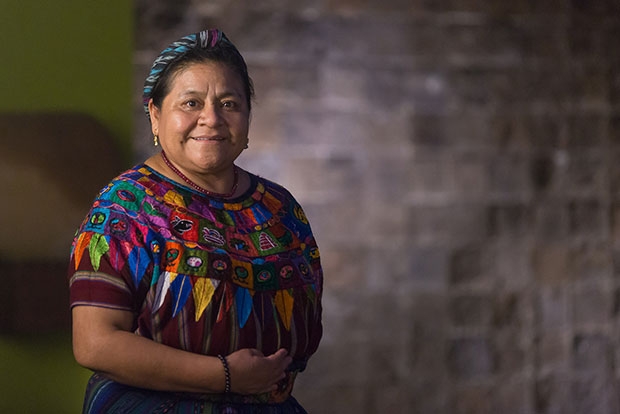
Rigoberta Menchú represents a voice emerging from the profound suffering of the Maya peoples—Indigenous populations of Central America, particularly in Guatemala. They embody the continuity of an ancient civilization that dates back thousands of years prior to European colonialism. Despite this rich cultural heritage, these communities have endured centuries of marginalization and exclusion, which intensified during the twentieth century under political systems that treated the Maya as an inferior group deprived of even their most basic economic and political rights.
Within this context, Menchú emerged not merely as an activist, but as a bearer of a collective memory burdened by oppression, carrying the suffering of her people beyond its isolated local boundaries into an international sphere that reopens fundamental questions of justice, identity, and the rights of Indigenous Peoples. Her experience has become a model illustrating how a single voice can expose an entire structure of injustice and redefine concepts of rights on a global scale.
The Historical Context of Guatemala: A State in the Aftermath of Colonialism and Systematic Violence
The struggle of Rigoberta Menchú cannot be understood in isolation from Guatemala’s political context, which was marked by a prolonged civil war lasting several decades, with the Maya peoples as its primary victims. Government policies were characterized by deep-seated exclusion, extending beyond economic and social marginalization to direct targeting of these communities as an “internal threat,” within a security discourse that justified repression.
In this context, the army became an instrument of systematic violence, committing grave human rights violations including extrajudicial killings, forced displacement, and the destruction of entire villages—practices later recognized by international reports as acts of genocide against the Maya people, in flagrant violation of international humanitarian law and the rules governing the protection of civilians during armed conflicts.
Personal Experience as a Gateway to Political Awareness
Rigoberta Menchú grew up in a poor rural environment within a Maya community, where discrimination was not exceptional, but a daily structure manifested through forced labor, denial of education, and political exclusion. Her experience did not produce an isolated individual awareness; rather, it revealed early on that what she endured was not personal injustice but part of a broader system targeting an entire people. This realization became especially evident through the loss of members of her family due to state violence, transforming her personal suffering into a deep political understanding of the conflict as an existential struggle between a dominant power seeking control and a people fighting for survival. Thus, her transition into human rights activism was not sudden, but the result of accumulated awareness shaped within harsh lived experiences.
Testimony as a Tool of Resistance: From Personal Narrative to Human Rights Documentation
Menchú gained global recognition through her testimony documenting the suffering of her people. This was not merely an autobiography; it became a powerful tool of resistance with profound human rights dimensions. Through her narrative, she reframed individual experience as evidence of systematic violations, helping shift the issue from a local concern to an international arena open to accountability.
This transformation granted her testimony an informal legal value, as it became a source relied upon by human rights organizations to demand investigations into committed crimes. This highlights a significant issue in international law regarding the role of personal testimonies in building human rights awareness. Menchú’s experience demonstrated that human storytelling can effectively activate mechanisms of justice, even in the absence of official state-issued documentation.
The Legal Dimension: From Violation to the Demand for International Justice
Menchú’s struggle represents a convergence between human rights advocacy and calls to activate mechanisms of international justice, particularly concerning violations against the Maya people. These violations meet the thresholds of crimes against humanity and genocide under international law. Her efforts contributed to pushing for recognition of these crimes—not only at a moral level but within legal frameworks that require accountability. She also indirectly supported transitional justice processes based on truth-seeking, reparations, and institutional reform—mechanisms aimed at addressing the legacy of mass violations. In this context, her discourse was not merely condemnatory but a call to rebuild a more just and inclusive legal system that recognizes Indigenous peoples’ rights to land, identity, and political participation.
The Nobel Peace Prize: International Recognition of the Transformation from Victim to Global Actor
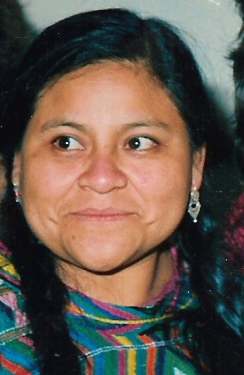
Menchú’s receipt of the Nobel Peace Prize was not simply an individual honor, but international recognition of a broader cause concerning Indigenous rights, particularly those of the Maya people. The award marked a shift in global perception—from viewing such issues as internal matters to recognizing them as human concerns requiring international solidarity. It also provided her with a platform to advance the discourse of social justice and advocate for the inclusion of Indigenous rights within the global human rights agenda, helping rebalance a discourse historically biased in favor of states over marginalized communities.
Identity and Culture as Tools of Resistance
Menchú’s struggle was inseparable from her cultural identity; rather, it was a defense of it against attempts at erasure.
Maya culture—including languages and traditions—was subjected to policies aimed at dissolving it into a dominant national identity, constituting a form of cultural violence. Thus, defending culture became part of human rights struggle, as Menchú linked human dignity to the recognition of cultural diversity. This aligns with the evolution of international law concepts that now recognize cultural rights as an integral part of the human rights system.
Critiquing Power and Redefining Legitimacy
Menchú’s discourse raises fundamental questions about the concept of legitimacy, revealing that when a state practices violence against its citizens—especially against specific groups such as the Maya peoples—it forfeits its moral and legal legitimacy. This critique is not limited to the Guatemalan case, but extends to any system that uses the law as an instrument of oppression.
Her analysis of power restores the principle that justice is not merely a set of written norms, but a lived practice that guarantees human dignity, giving her struggle a philosophical dimension that transcends the local context.
Rigoberta Menchú’s influence has extended beyond her country, making her a global symbol of the struggle for indigenous peoples’ rights, not only in Guatemala but across the world—from Latin America to Asia and Africa. She has contributed to reshaping human rights discourse to include issues previously marginalized, such as the right to land, identity, and collective memory. Her experience has also inspired other movements worldwide, reflecting the strength of a model that unites personal experience with human rights activism.
Conclusion: Justice as an Ongoing Process, not a Final Destination
The experience of Rigoberta Menchú affirms that justice is not a momentary event, but a long-term process requiring continuous confrontation with structures of injustice. She succeeded in transforming her suffering into a force for change and in redefining the role of the individual in confronting oppressive systems. Her legacy lies not only in what she achieved, but in the new horizons she opened for understanding justice as a dynamic process demanding collective participation, political will, and a renewed human rights consciousness.
End
