
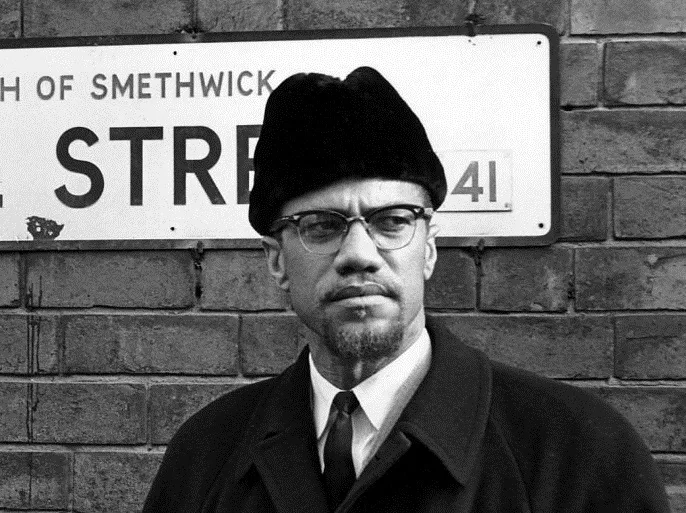
Malcolm X: The Conscience of Legitimate Anger and the Voice of Resistance Against Racism
8/4/2026 – Union for Justice Foundation
Origins and Early Life: A Formative Experience
Malcolm X, born Malcolm Little and also known as El-Hajj Malik El-Shabazz, was an African American Muslim preacher and human rights advocate. He corrected the course of the Islamic movement in the United States after it had significantly deviated from authentic Islamic doctrine, calling for adherence to the true doctrine and persevering in this mission until he was assassinated for his advocacy.
Malcolm X was born in 1925 in the United States, in an environment marked by racial violence and systematic oppression against Black people. His father was an activist defending the rights of African Americans, which made the family a target for racist groups. Malcolm experienced a troubled childhood, deeply affected by his father’s death under mysterious circumstances believed to be linked to racial violence. This was followed by the disintegration of his family and his placement in foster care, leaving a profound psychological impact on his personality.
These were not merely personal experiences but formative ones that shaped his early awareness of the racist system in the United States. He realized that discrimination was not just individual acts but a comprehensive structure shaping individuals’ lives from early childhood. This understanding later permeated his speeches, marked by sharp critique and clarity of stance, as he recognized that the oppression he endured was not exceptional but a shared reality for many.
Intellectual Transformation: From Deviation to Awareness
Malcolm X endured a difficult youth. His father was killed by white supremacists when Malcolm was young, at least one of his uncles was executed without trial, and his mother was institutionalized in a mental hospital when he was thirteen. He was placed in foster care, and in 1946, at the age of twenty, he was imprisoned for burglary and theft.
His imprisonment marked a decisive turning point in his life. Rather than surrendering to his circumstances, he embarked on a profound intellectual journey, engaging in extensive reading and self-education. He explored history, political thought, and issues of race and identity.
This period enabled him to reconstruct his consciousness, realizing that his personal experience was part of a broader reality of discrimination and oppression. He transformed from a lost young man into a thinker seeking to understand the roots of injustice, paving the way for his emergence as one of the most prominent voices advocating for Black rights. This stage demonstrated that intellectual transformation can arise from the harshest conditions, and that awareness can be the beginning of real change.
Struggle Against Discrimination: A Confrontational Rhetoric
Malcolm X adopted a distinctive approach to activism compared to some civil rights leaders. He did not rely on conciliatory rhetoric or calls for patience; instead, he embraced a direct discourse based on openly confronting injustice. He believed that racial discrimination could not be addressed through gradual demands, but necessitated a firm and uncompromising stance that rejects submission and clearly asserts rights.
He expressed this through speeches emphasizing the necessity of defending human dignity and rejecting all forms of humiliation. He argued that freedom is not granted by authority but seized through awareness and determination.
This discourse attracted a large number of young people who found in it an authentic expression of their suffering, and it contributed to expanding the debate on the nature and methods of struggle.
African Identity: Reclaiming Dignity
Malcolm X’s struggle extended beyond political rights to include cultural identity. He believed that discrimination affects not only rights but also an individual’s self-perception. Therefore, he called for pride in African identity and rejected the stereotypes imposed on Black people in American society.
He argued that reclaiming dignity begins with self-awareness and rejecting cultural subordination. This led him to advocate redefining identity based on pride and belonging. His perspective contributed to enhancing cultural awareness among African Americans and shifted the struggle from mere political demands to a deeper project related to identity and human dignity.
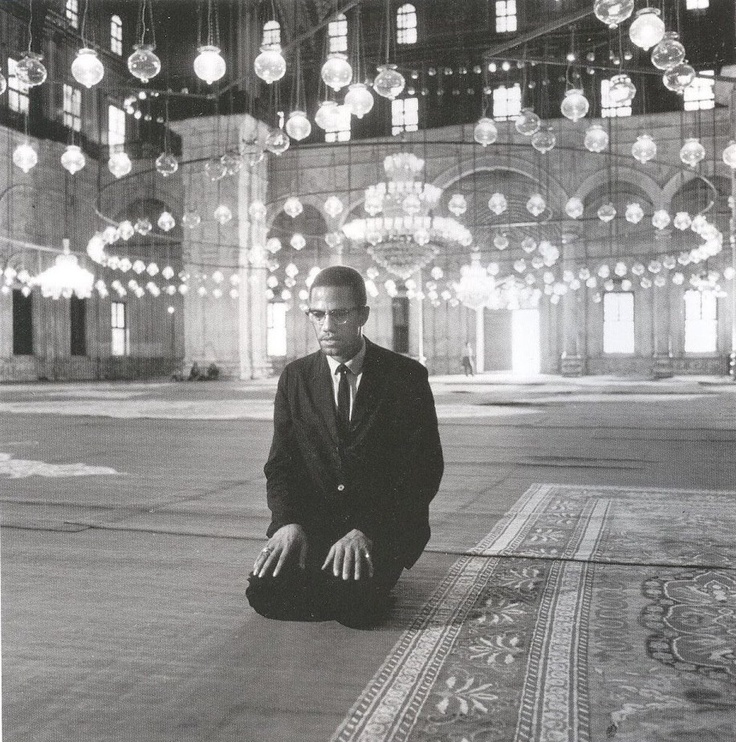
His pilgrimage to Mecca marked a profound turning point in his intellectual journey. There he encountered a diverse and racially integrated Islamic community of different races living in equality and respect—an experience starkly different from the racism of the United States. This led him to reconsider some of his earlier views.
Following this experience, his rhetoric became more inclusive, focusing not only on Black issues but on human justice broadly. He called for cooperation among peoples and rejection of all forms of discrimination, reflecting a significant intellectual evolution and underscoring how human experience can reshape convictions.
Global Influence: From Local to Global
Malcolm X’s influence was not confined to the United States; it extended globally. His ideas inspired numerous liberation movements, particularly in Africa and the Islamic world. He helped connect local struggles against racial discrimination with global struggles against colonialism and domination.
He demonstrated that issues of justice and dignity are not merely local but possess a universal human dimension. As a result, his influence persisted even after his death. He became a global symbol of struggle, reflecting the individual’s capacity to shape the course of history.
Assassination: End of the Body, Beginning of the Symbol
In 1965, Malcolm X was assassinated in an incident that shook American society. Yet his death cemented his status as a symbol of struggle. His assassination did not end his thought but marked the beginning of its wider dissemination. He became a symbolic figure representing dignity and resistance.
This ending illustrated that the struggle for justice may be fraught with risks, yet it leaves a profound impact beyond the individual’s life. His name became associated with the idea that freedom is worth sacrifice and that the voice defending truth cannot be silenced.
Enduring Legacy: A Voice That Does Not Fade
Malcolm X represents a model of a leader who never compromised his principles and sought to redefine justice through a framework grounded in dignity and identity awareness. He left behind an intellectual legacy emphasizing the importance of confrontation, awareness, and the individual’s role in transforming reality.
His name will remain present in human memory as a symbol of struggle and a voice reminding us that justice is realized only when individuals firmly uphold their rights and refuse submission to injustice, regardless of the challenges.
End
