Union for Justice: Israel Advances Settlement Plan E1 to Complete Separation of Jerusalem from Its Surroundings
July 16, 2025 – Union for Justice
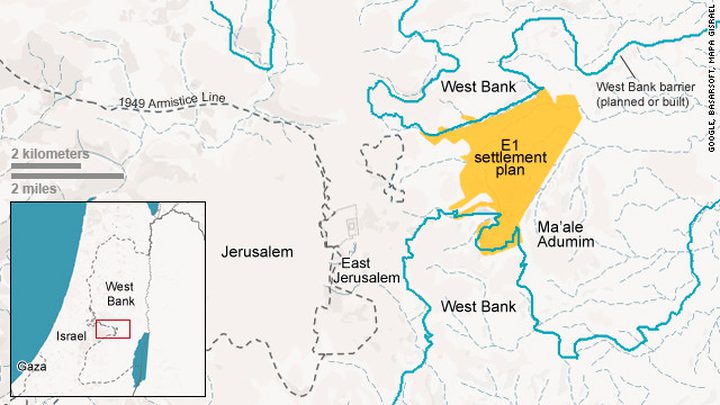
The Union for Justice stated that the revival of the Israeli settlement project E1, after being temporarily frozen since 2021, aims to complete the separation of Jerusalem from its Palestinian surroundings, link it with the Israeli interior, and prevent any geographic or demographic continuity between the northern and central parts of the West Bank.
The organization pointed out that this settlement plan — previously halted due to international pressure on Israel — comes as part of broader projects intended to eliminate the two-state solution and impose new realities on the ground, making the establishment of a Palestinian state on the June 4, 1967 borders impossible.
The Union for Justice stressed that proceeding with this settlement scheme would cause severe harm to nearly one million Palestinians living in the only remaining area of land situated at the heart of the Palestinian urban continuum between Ramallah, Jerusalem, and Bethlehem. It could also result in the displacement of thousands of residents and the demolition of their homes.
According to media sources, the Israeli government and its affiliated body — the so-called “Higher Planning Council of the Civil Administration in the Israeli army” — recently announced a settlement plan that includes the construction of 3,412 new settlement units for the settlement of Ma’ale Adumim, on lands covering approximately 12,000 dunams (1 dunam = 1,000 m²), to be implemented in two phases.
The settlement of Ma’ale Adumim is one of the largest and fastest-expanding Israeli settlements in the West Bank since its establishment in 1975 east of occupied East Jerusalem. It is home to more than 40,000 settlers and constitutes one of the three major settlement blocs in the West Bank, alongside Ariel in the north and Gush Etzion in the south.
According to a report issued by the United Nations Human Rights Committee, around 700,000 settlers currently live in 279 settlements across the West Bank and East Jerusalem, compared to 520,000 settlers in 2012. All of these settlements are concentrated in Area C, which constitutes over 60% of the West Bank’s territory.
Land Confiscation as a Precursor to Settlement Projects
According to the Union for Justice, the occupying power has exploited the international community’s preoccupation with the ongoing war on the Gaza Strip as an opportune moment to advance its comprehensive plans for full control over the West Bank through a wide range of measures.
Since October 7, 2023, the occupation authorities have escalated the demolition of Palestinian structures, particularly in Area C, alongside large-scale demolitions in the refugee camps of Jenin and Tulkarm. In parallel, settler attacks have reached record levels, especially against Palestinian Bedouin communities and in the Jordan Valley. These actions have been accompanied by a series of land confiscation orders for the expansion of settlements and military sites.
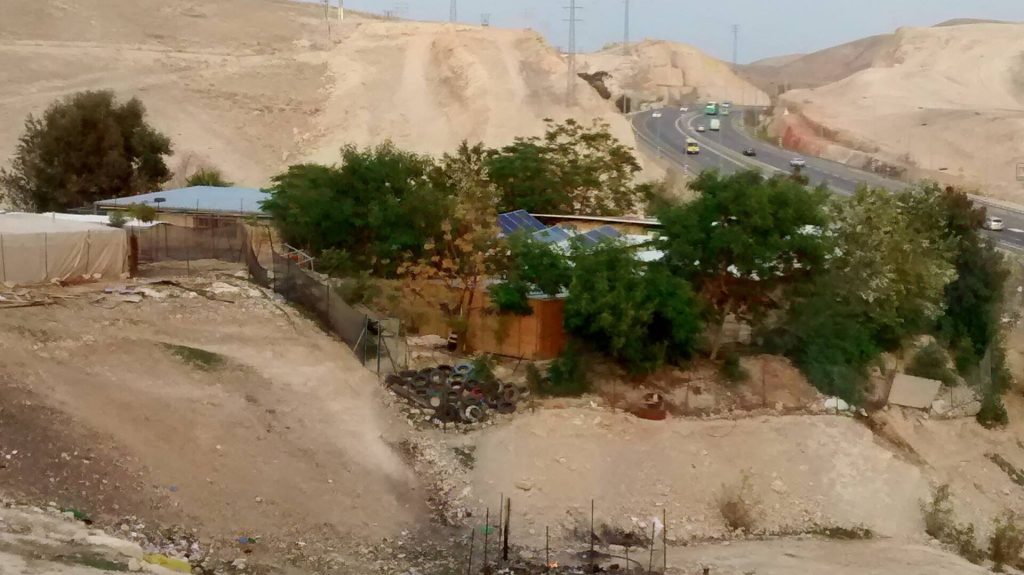
Based on monitoring by the Union for Justice, the occupation authorities have confiscated thousands of dunums of land across Jenin, Qalqilya, Salfit, Bethlehem, Hebron, and Jerusalem over the past three months. The most prominent cases include:
April 6, 2025: Seizure of 57.79 dunums of land belonging to residents of Al-Khader, Artas, and Beit Ummar (Bethlehem and Hebron governorates) to establish a buffer zone around the settlement of Efrat.
April 10, 2025: Seizure of approximately 137 dunums of land from the towns of Silwad, Ein Yabrud, Beitin, Burqa (east of Ramallah and Al-Bireh) and Mukhmas (northeast of Jerusalem), in order to expand Highway 60 near the colonial industrial zone known as Sha’ar Binyamin.
May 7, 2025: Seizure of around 2 dunums from the villages of Siniria and Mas-ha (south of Qalqilya) in preparation for the construction of new settlement units for the outpost Sha’arei Tikva.
May 16, 2025: Seizure of 13 dunums and 117 m² of land in Bruqin (Salfit Governorate) to erect a separation fence near the settlement of Brukhin.
June 4, 2025: Military order to confiscate 42 dunums of land in Ramallah and Al-Bireh Governorate for “military and security purposes,” including 23.834 dunums from Shabtin , Deir Ammar, and Deir Qaddis (west of Ramallah) and 18.554 dunums from Deir Ghassana and Al-Lubban (northwest of Ramallah).
June 25, 2025: Confiscation order for the road adjacent to Wadi Azreiq in Hizma (northeast of Jerusalem), from the main road leading to Jaba‘ to the Aqabat area, including surrounding lands.
June 26, 2025: Confiscation of land in Raba (east of Jenin) under the pretext of constructing a road and an Israeli military base in the area known as Jabal al-Masalmeh.
June 26, 2025: Seizure of 2 dunums and 202 m² from the lands of Ya’bad (south of Jenin) for military purposes.
June 29, 2025: Seizure of hundreds of dunums and several vital roads in Masafer Yatta (south of Hebron) for the expansion of the settlements Metzair, Givat Hanan, and Havat Ma’on, and to connect them to the settlement road network.
July 7, 2025: Confiscation of 744 dunums from Al-Mughayir and Khirbet Jib’it (northeast of Ramallah) to expand the new settlement of Malakhi HaShalom.
July 8, 2025: Seizure of 6 dunums in the Ain al-Qeisess area (west of Al-Khader, Bethlehem) to expand the outpost of Sde Boaz, which had already consumed nearly 100 dunums of agricultural land.
July 12, 2025: Military order to seize 5 dunums and 163 m² of land from Sa’ir and Ash-Shuyukh (Hebron Governorate) for military and security purposes.
End
