30/6/2026 – Union for Justice Foundation
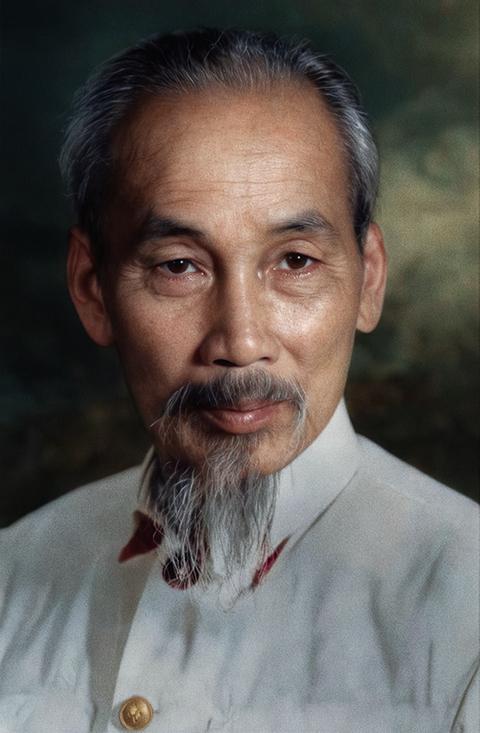
Ho Chi Minh (1890–1969) is regarded as one of the most prominent leaders of national liberation movements in the twentieth century. His name became closely associated with Vietnam’s struggle for independence from French colonial rule and later with resistance to American intervention during the Vietnam War. Ho Chi Minh was not merely a political or military leader; he was a figure who combined revolutionary thought, organizational leadership, and the ability to transform the Vietnamese cause into a global symbol of resistance to foreign domination. At a historical moment when colonial powers exercised control over vast parts of the world, he presented a model of a national liberation movement that linked political independence with national dignity, based on his conviction that peoples cannot build their future so long as they remain subject to an external power that controls their resources and political decision-making.
Vietnam Under Colonial Rule and the Emergence of National Consciousness
Since the nineteenth century, Vietnam had been subjected to French colonial rule as part of what became known as ‘’French Indochina’’, where France imposed political and economic control aimed at exploiting resources and consolidating its influence in the region. This colonial presence was accompanied by the widespread marginalization of the local population, the denial of meaningful political participation, and the imposition of cultural and administrative systems linked to the colonial center. Colonialism was not merely a military occupation but a comprehensive system that reshaped the economy and society to serve French interests, thereby contributing to the growth of national consciousness and the desire for liberation.
Within this context, Ho Chi Minh’s political consciousness was shaped through diverse experiences both inside and outside Vietnam. During his youth, he traveled to several countries and came into contact with various political and intellectual movements. These experiences enabled him to understand the global nature of colonialism and the relationship between economic domination and political control. He also realized that the suffering of the Vietnamese people was not an isolated case but part of an international system based on the subjugation and exploitation of colonized peoples. From this perspective, he began developing a vision that linked national liberation with social justice, maintaining that independence could not be achieved merely by ending foreign occupation but also required building a society capable of safeguarding its sovereignty and ensuring greater equality among its people.
Based on this vision, Ho Chi Minh recognized that resistance to colonialism required a political organization capable of uniting Vietnamese society around a clear national project. He therefore contributed to the establishment of movements and organizations aimed at mobilizing the Vietnamese people against French occupation before later leading the Viet Minh movement, which played a central role in the War of Independence. For him, armed struggle was not simply a military option but a means of asserting the Vietnamese people’s right to self-determination, particularly after attempts to achieve political solutions with the colonial powers had failed. Through this approach, the resistance evolved into a broad popular movement that combined the national dimension with the objective of liberation.
Independence and Sovereignty in the Face of Foreign Intervention
Ho Chi Minh’s struggle represented a practical embodiment of the principle of the right of peoples to self-determination, a principle that later became one of the fundamental norms of modern international law. He rejected the continuation of French rule over Vietnam, arguing that any foreign authority imposed upon a people by force lacked both moral and political legitimacy. From this perspective, the demand for independence was not merely a nationalist cause but also a matter of rights, concerning the right of peoples to choose their political system and manage their resources and future free from foreign domination.
Following the end of French colonial rule, Vietnam entered a new phase of conflict marked by American intervention within the context of the Cold War and efforts to contain communist movements in Asia. Ho Chi Minh, however, presented this conflict as a continuation of the struggle for national independence, emphasizing that the core issue lay in the Vietnamese people’s right to determine their own future without foreign interference. The Vietnam War consequently transformed Vietnam into a global symbol of resistance to major powers, particularly as international criticism intensified over the scale of destruction and humanitarian losses caused by the war.
The Vietnamese experience also generated extensive legal and human rights debates concerning the legitimacy of colonialism, foreign military intervention, and the limits governing the use of force during armed conflicts. It contributed to strengthening the international discourse that viewed national liberation not as an unlawful rebellion but as a right recognized under international legal instruments, thereby making the Vietnamese cause an integral part of the global discussion on international justice and the rights of peoples living under occupation or foreign intervention.
National Identity and Ho Chi Minh’s Global Legacy
Ho Chi Minh’s project was not confined to military and political dimensions. He also sought to strengthen Vietnamese national identity in the face of the legacy of cultural colonialism. He understood that foreign domination was exercised not only through military force but also through language, culture, and collective consciousness. Accordingly, he focused on developing a national discourse that reinforced a sense of belonging and cultural independence while linking political liberation with the restoration of confidence in local identity. This dimension gave his project a broader and more comprehensive character, as he regarded independence not merely as a transfer of political authority but as a process of rebuilding society and restoring national consciousness.
Ho Chi Minh’s influence extended far beyond the borders of Vietnam, making him a symbol for national liberation movements across Asia, Africa, and Latin America. Many peoples regarded him as an example of a leader who succeeded in confronting major powers and defending his country’s independence despite overwhelming military and political disparities. His experience also contributed to strengthening the global anti-colonial discourse and reinforcing the principle that resistance to foreign domination constitutes an inherent component of peoples’ right to freedom and sovereignty.
Ho Chi Minh’s experience demonstrates that the struggle for independence is not limited to ending military occupation but extends to rebuilding the people’s will and their ability to determine their own political and cultural future. He understood that the most dangerous consequences of colonialism lay not only in control over territory but also in attempts to subjugate the consciousness of peoples and undermine their capacity to shape their own future. Accordingly, his project was founded upon linking national liberation with the restoration of collective dignity.
In this context, Ho Chi Minh’s legacy continues to endure as one of the foremost symbols of anti-colonial resistance in the twentieth century, not only because of his political achievements but also because he helped transform the Vietnamese cause into a global model of the struggle for sovereignty and justice. His experience therefore represents not merely a chapter in Vietnam’s history but part of a broader history concerning the right of peoples to freedom, independence, and resistance to foreign domination.
End
