30/12/2025 – Union for Justice Foundation
Since South Africa filed its case in December 2023, several states have announced their intervention on the basis of Articles 62 and 63 of the Statute of the International Court of Justice (ICJ). Brussels has now submitted a declaration of intervention, thereby joining Brazil, Colombia, Ireland, Mexico, Spain, and Türkiye in supporting the case brought against Israel before the Court.
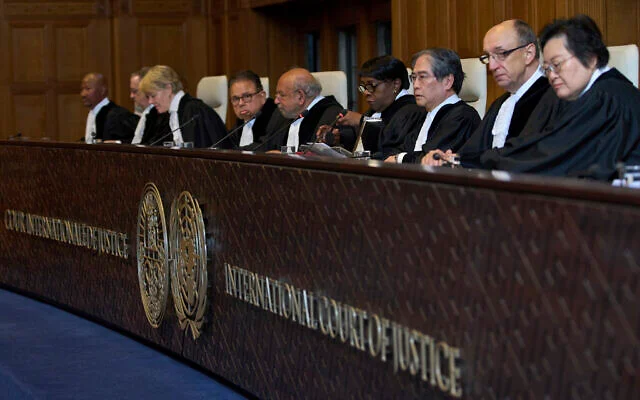
Belgium has formally joined South Africa in proceedings before the International Court of Justice, which accuse Israel of committing genocide in the Gaza Strip. In a statement, the United Nations’ highest judicial body, based in The Hague, confirmed that Belgium has filed an official declaration of intervention in the case.
A number of states have already joined the proceedings, including Brazil, Colombia, Ireland, Mexico, Spain, and Türkiye. Nicaragua initially sought to intervene but withdrew its request two months later without providing a reason. South Africa originally brought the case before the ICJ in December 2023.
On 23 December 2025, a significant legal development occurred when the ICJ announced that Belgium had formally submitted its request to intervene. Through this step, Belgium strengthens the international legal track aimed at investigating violations committed in the Gaza Strip, becoming a prominent European voice in this case. Belgium based its intervention on Article 63 of the Court’s Statute, which allows states party to the 1948 Convention on the Prevention and Punishment of the Crime of Genocide to present their legal views and interpretations of the treaty’s provisions. Once accepted, Belgium will be legally bound by any interpretation the Court later issues regarding the Convention provisions at issue.
The core of the Belgian intervention focuses on the interpretation of Article II of the Genocide Convention, particularly the requirement of “genocidal intent.” Belgium argues that the existence of military objectives does not justify the targeting of civilians in a manner that results in genocide. It further asserts that grossly disproportionate military operations may constitute legal evidence of genocidal intent, regardless of claims of compliance with other bodies of international law.
Belgium’s move comes amid growing international pressure, particularly following its decision to recognize the State of Palestine in September 2025. The intervention reflects Israel’s increasing legal isolation in international judicial forums and signals a shift in the positions of some European states toward adopting more robust legal measures in relation to the conflict.

Israel has rejected the genocide accusations, describing them as unfounded and accusing South Africa of acting as a proxy for Hamas. Israel maintains that it makes every effort to avoid harming civilians and places responsibility for civilian deaths on Hamas, alleging that its fighters operate within densely populated areas. In rulings issued in January, March, and May 2024, the ICJ ordered Israel to take all possible measures to prevent acts of genocide in Gaza, including the provision of urgent humanitarian assistance to avert famine. These orders are legally binding, although the Court lacks concrete enforcement mechanisms.
According to the Palestinian Ministry of Health in Gaza, more than 70,000 people have been killed in the war in the Strip, including at least 395 since the start of the ceasefire on 10 October. The United Nations considers these figures credible. Belgium was among a group of states that recognized an independent Palestinian state in September, a status now recognized by approximately 80 percent of UN member states.
Following Belgium’s submission, the ICJ granted both parties to the dispute—South Africa and Israel—the opportunity to file written observations. This procedural step forms part of the Court’s lengthy process toward ruling on the merits of the case, while international interventions continue to serve as a means of reinforcing the legal arguments advanced against the accused party.
End
