Report of the Union for Justice on the Reality of Violations in Sudan
19/11/2025 – The Union for Justice
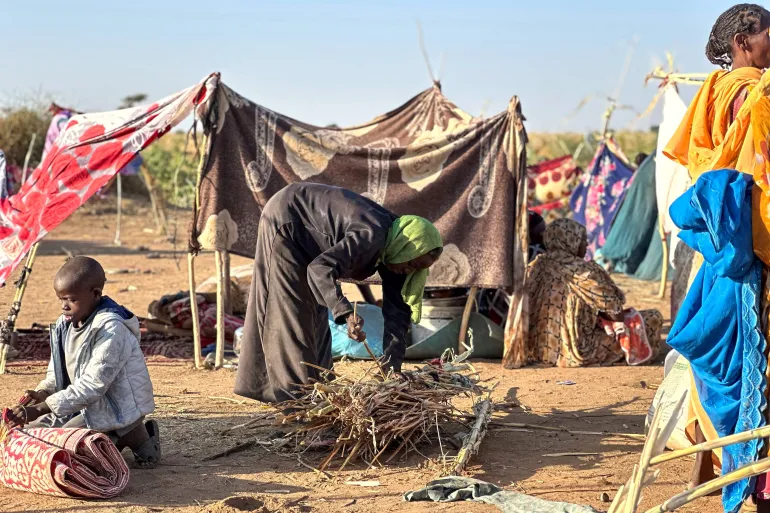
Since the outbreak of the conflict on April 15, 2023, Sudan has witnessed a series of successive crises that have exacerbated the humanitarian situation and severely deteriorated human rights conditions. With escalating armed conflicts and the absence of political and security stability, violations against civilians have become a daily reality threatening their lives and dignity. These violations have ranged from indiscriminate killings, forced displacement, and direct targeting of vital infrastructure, to strict restrictions on freedom of movement and limitations on humanitarian work.
This report analyzes the most prominent violations that have occurred recently and reviews their direct effects on the civilian population, highlighting the challenges facing international efforts, seeking a deeper understanding of the crisis and ways to mitigate its consequences.

A report issued by the United Nations Human Rights Council on human rights violations in Sudan indicated that “the rebel Rapid Support Forces militia committed genocide and extrajudicial killings in Al-Jazeera, Al-Geneina, Ardumta, Al-Jumumiyya, Al-Salihah, Al-Abyad, Al-Nahud, Al-Khuwi, and the Zamzam and Abu Shouk camps.” The total number of victims of these violations reached 28,613 dead and 43,575 injured, and the numbers continue to rise.
The report also indicated that “the rebel militia” used widespread sexual violence, including individual and mass rape and sexual enslavement, as a weapon and tool of humiliation aimed at displacing communities and altering demographics.
These violations were documented by United Nations reports. The National Committee recorded 98 cases of rape, while the Unit to Combat Violence Against Women documented 1,392 rapes, including minors, representing less than 2% of reported cases due to fear of social stigma.
According to the same report, “the rebel militia” violated children’s rights by forcibly recruiting 9,000 minors and pushing them into battlefields. They also enlisted mercenary gangs from more than 12 countries.
There were 14,506 cases of enforced disappearance, according to investigations by the National Committee, in addition to the execution of prisoners. The report also mentioned the discovery of 965 mass graves, likely containing many forcibly disappeared individuals, detained persons, and executed prisoners.
Through the Union for Justice’s monitoring of events in Sudan, it was found that starvation was used as a weapon of war against civilians through the siege of humanitarian and food aid, in addition to committing heinous crimes against humanity, including mass executions, rape, forced recruitment, enforced disappearance, torture, and more.
Through research efforts, the Union for Justice obtained harrowing testimonies collected by Reuters from survivors of the Rapid Support Forces attack in Al-Fashir. One witness said:
“I was part of a group trying to escape heavy shelling when Rapid Support Forces trucks surrounded us, sprayed civilians with machine gun fire, and ran them over with their vehicles, including youths, elderly, and children.”
Another witness said:
“Some civilians were abducted by Rapid Support Forces fighters to unknown locations, and their fate is unknown.”
In another testimony by a person named Mubarak:
“Fifty or sixty people on a single street, they killed them with a bang, bang, then went to the next street, again bang, bang, bang. This is the massacre I saw in front of me. Many people, often injured or elderly, did not leave the city and were killed in their homes.”
The UN Human Rights Council, on 14/11/2025, ordered an investigation into the violations that took place in Al-Fashir, Sudan, seeking to identify the perpetrators and bring them to justice. The Council, the UN’s highest human rights body, adopted a resolution calling on its Independent Fact-Finding Mission in Sudan to urgently investigate these violations, urging the identification of suspected perpetrators wherever possible to ensure accountability.
UN High Commissioner for Human Rights Volker Türk said:
“The bloodstains on the ground in Al-Fashir were captured from space,” adding: “The stain of shame on the face of the international community is less visible but no less harmful,” calling for action “against individuals and companies that fuel and benefit from this war.”
All of the above, along with the live testimonies, illustrates the scale of violations in Sudan, which now exceeds acceptable humanitarian limits and reflects a horrifying reality threatening the lives of civilians and the stability of Sudanese society as a whole. These testimonies confirm that violence is no longer an isolated incident but a pattern that requires a real and collective response.
Based on the vision of the Union for Justice, which is founded on defending human rights and documenting facts, we emphasize that our responsibility does not stop at monitoring violations. It goes beyond amplifying the voices of affected individuals, providing urgent protection for civilians in all conflict areas. The Union also stresses that documentation is a crucial step to deter perpetrators and support any future accountability process. Accordingly, this report calls on all regional and international actors to enhance efforts to stop violations, ensure the delivery of humanitarian aid, protect the most vulnerable groups, and pave the way for a safe reality allowing Sudanese citizens to regain their lives and fundamental rights.
End
