
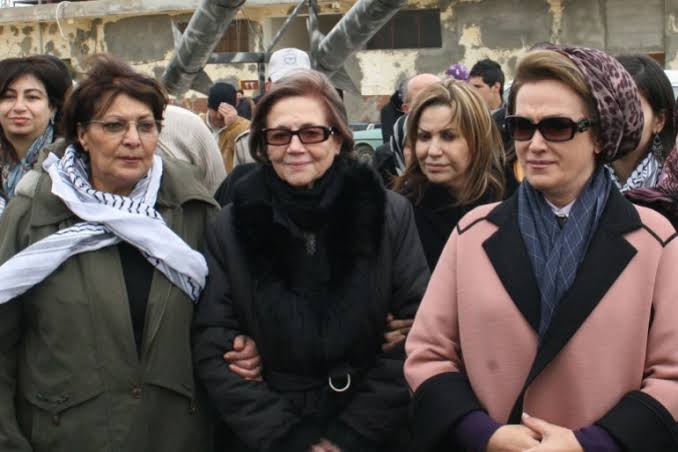
Djamila Bouhired The Woman Who Became a Global Symbol of Anti-Colonial Resistance
23/7/2026 – Union for Justice Foundation
Djamila Bouhired (1935) is regarded as one of the most prominent female figures in the history of twentieth-century national liberation movements. Her name has become inseparably associated with the Algerian Revolution waged by the Algerian people against French colonial rule. Djamila was not merely a participant in the national liberation struggle; following her arrest, torture, and trial by the French colonial authorities, she became a global symbol of resistance and steadfastness. Her story gained widespread international recognition, extending far beyond the borders of Algeria, and transformed her into a model of a woman who confronted a powerful colonial machine with unwavering determination and a profound belief in her people’s right to freedom and independence. Through her experience, the role of women in resistance emerged as an integral part of the history of national liberation, rather than merely a secondary element in political and military events.
Djamila Bouhired was born in Algeria during the period of French colonial rule and grew up in an environment shaped by the country’s rapidly evolving political developments. The realities of discrimination and colonial domination contributed to the formation of her national consciousness from an early age, as she came to understand that the conditions faced by Algerians could not be separated from the existence of a foreign power controlling their destiny. As the Algerian national movement gained momentum, she was drawn to the struggle for independence, convinced that freedom is not granted by colonial powers but won through sacrifice and collective action. This early awareness laid the foundation for her subsequent involvement in the ranks of the Algerian Revolution.
Djamila Bouhired’s experience demonstrates that Algerian women were not on the margins of the revolution but were active participants in the national liberation project. Women took part in carrying messages and weapons, providing logistical support, and directly participating in certain resistance operations. Within this context, Djamila emerged as one of the most renowned female figures of the revolution, helping to challenge the traditional perception that confined women’s role to the private sphere. Her experience demonstrated that the struggle against colonialism was not solely a men’s cause, but rather a national cause in which all segments of society participated in defense of the country’s future.
Steadfastness in the Face of Colonial Repression
Djamila Bouhired’s arrest marked a turning point in her life, as she was subjected to interrogation and torture in an attempt to extract confessions and information concerning the Algerian Revolution. What gave her story its enduring symbolic significance, however, was her ability to remain steadfast despite the harsh conditions she endured. Her suffering evolved into both a political and humanitarian cause that extended beyond Algeria after the methods of torture employed against her provoked widespread criticism within France and internationally. In this context, Djamila became a symbol not only of armed resistance but also of resistance against attempts to break the human spirit through violence and oppression.
The case of Djamila Bouhired represents a prominent example of the violations that accompanied many colonial experiences. Her trial and the allegations of torture surrounding it sparked extensive debate regarding the legitimacy of the practices employed by the colonial authorities. From a human rights perspective, torture constitutes a grave violation of human dignity and of fundamental rights that must never be infringed under any circumstances. Her case also helped draw international attention to the practices of French colonial rule in Algeria and became part of the broader discussion concerning states’ responsibility for violations committed during armed conflicts and national liberation movements.
From a National Symbol to a Global Icon of Resistance
Djamila Bouhired did not remain merely an Algerian figure associated with a specific historical event; she became a global symbol of resistance to colonialism. Many peoples found in her story an example of an individual who remained committed to her rights despite oppression, while liberation movements viewed her as a testament to the power of individual determination to inspire broad collective struggle. Literary, artistic, and media works documenting her life further cemented her place in global memory, making her image synonymous with steadfastness, freedom, and sacrifice.
Djamila Bouhired’s influence extends far beyond the Algerian Revolution itself. Her life has become part of broader discussions concerning the role of women in political and liberation struggles. Her experience helped demonstrate that women were not merely witnesses to history but active participants in shaping it. Her story also reaffirmed that the defense of national independence is inseparably linked to the defense of human dignity, and that resistance to colonialism is not merely a struggle over land or political authority but a struggle for the recognition of peoples’ right to freedom and self-determination.
Djamila Bouhired’s experience demonstrates that the strength of liberation movements is measured not only by the political or military victories they achieve but also by the human symbols they produce throughout their struggle. She was transformed from a young resistance fighter who endured arrest and torture into a global symbol of steadfastness in the face of oppression, and her story stands as enduring testimony to humanity’s capacity to remain faithful to its principles even under the harshest circumstances.
In this context, Djamila Bouhired’s legacy continues to endure as part of the global memory of resistance to colonialism and the defense of human dignity. Her story recounts not only a chapter in the history of the Algerian Revolution but also expresses a broader human experience affirming that freedom is often won through sacrifice and that the steadfastness of individuals can become a source of inspiration for entire generations striving for justice and independence.
End
