Union for Justice: The Occupation Government Passed and Implemented 15 Racist Decisions Against Palestinians During July
2/8/2025 – Union for Justice Foundation
The Union for Justice Foundation stated that the Israeli occupation authorities—represented by their judicial, legislative, and executive branches—issued and implemented 15 racist decisions and measures against Palestinians and international solidarity activists in July 2025.
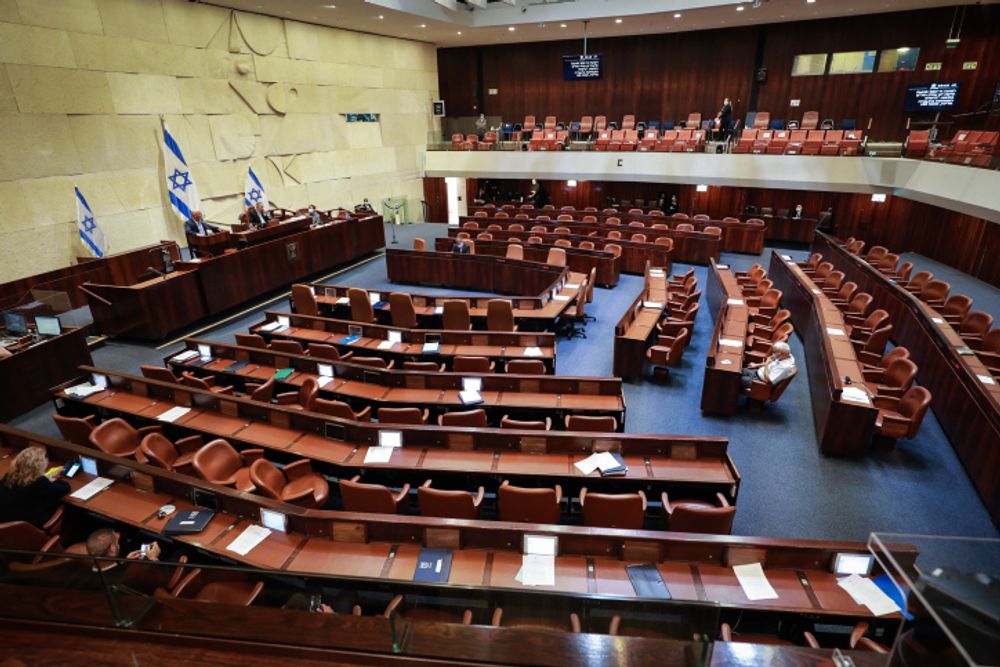
The foundation noted that last July was packed with legislation passed by the Israeli parliament, the Knesset, targeting Palestinians living in the territories occupied in 1967 as well as those residing in the territories occupied in 1948.
According to the Union for Justice, these decisions varied between entrenching and supporting settlement activity in the West Bank, tightening restrictions on the United Nations Relief and Works Agency for Palestine Refugees (UNRWA), stripping what remains of the Palestinian Authority’s powers, and extending Israeli sovereignty over the West Bank.
The foundation stressed that these decisions are racist, in violation of international law, and are part of ongoing efforts to pressure Palestinians—particularly in Jerusalem—and to kill the idea of a two-state solution, especially as international recognition of a Palestinian state continues to grow.
The Union for Justice Foundation reviewed the most significant of these decisions issued by the occupation in July.
On the 5th of July, the Israeli Knesset’s Education Committee approved, in the second and third readings, a draft law banning the employment of teachers holding academic degrees from Palestinian Authority universities. The justification given was that such graduates come from universities that are “anti-Semitic” and “deny the existence of the State of Israel,” and that the law was intended to preserve the educational values of Israel as a Jewish and democratic state.
This decision is expected to deprive hundreds of Arab students from the Palestinian population of 1948 of the opportunity to enroll in Palestinian universities in the West Bank.
Targeting the Student Movement in Israeli Universities
On July 8, the Israeli Knesset’s Education Committee approved a draft law requiring Israeli higher education institutions to ban activities organized by student committees that are considered affiliated with “terrorist organizations” or that “incite terrorism” against Israel. This law will be presented to the Knesset plenum for a vote in its second and third readings.
On July 13, in a discriminatory measure, the occupation authorities decided to ban travelers holding Jerusalem identity cards from departing through the VIP service at Jericho, which is under the control of the Palestinian Authority.
Targeting UNRWA in Jerusalem
On July 14, Israeli Energy Minister Eli Cohen announced the cutoff of electricity and water to the offices of the United Nations Relief and Works Agency for Palestine Refugees (UNRWA) in Israel.
This cutoff of electricity to UNRWA headquarters was the latest in a series of Israeli steps aimed at dismantling the agency’s work in East Jerusalem. At the end of January 2025, Israel’s decision to ban UNRWA came into effect, forcing the agency to evacuate a main office in the Sheikh Jarrah neighborhood of Jerusalem. Israel also decided to close six UNRWA schools in East Jerusalem.
According to UN resolutions, East Jerusalem is considered occupied territory, and UNRWA’s work there falls under the same legal framework as in the rest of the Palestinian cities occupied after the 1967 war in the West Bank and Gaza Strip.
On October 28, 2024, the Knesset approved, by a large majority, two laws that permanently ban UNRWA from carrying out any activities inside Israel, revoke its privileges and facilities, and prohibit any formal contact with the agency.
The Most Dangerous Decision: Resuming the E1 Settlement Project
The most dangerous of the decisions issued by the occupation authorities came on July 14, when the Israeli government decided to resume the “E1 settlement project”, which includes the construction of more than 3,000 new housing units east of occupied Jerusalem, after a temporary freeze since 2021.
The project aims to complete the separation of Jerusalem from its Palestinian surroundings and link it to the Israeli interior, preventing any geographic and demographic continuity between northern and central parts of the West Bank. This would effectively eliminate the two-state solution and impose new facts on the ground that make the establishment of a Palestinian state on the June 4, 1967 borders impossible.
Targeting the Ibrahimi Mosque in Hebron
On July 15, the Israeli occupation authorities decided to transfer the supervisory powers over the Ibrahimi Mosque from the Hebron Municipality to what is called the Religious Council of the Kiryat Arba settlement, under the supervision of the Israeli Civil Administration. This is the first such step since the Ibrahimi Mosque massacre in 1994.
The Palestinian Ministry of Awqaf traditionally holds authority over the Ibrahimi Mosque — the second most important Islamic religious site in Palestine after Al-Aqsa Mosque. Its responsibilities include supervising and managing the mosque’s facilities, including security, cleaning, maintenance, electricity, water, sermons, and prayers.
The Ibrahimi Mosque covers an area of about 2,040 square meters, surrounded by massive stone walls, and is located in the Old City of Hebron, which has remained under full Israeli control under the Hebron Agreement signed between the PLO and Israel in 1997.
Seizure of Properties in Jerusalem
Among the decisions issued last month, Israeli Minister of “Jerusalem and Heritage” (resigned) Meir Porush announced, on July 20, the seizure of 20 Palestinian properties in the Bab al-Silsila neighborhood, one of the main gates to Al-Aqsa Mosque. These properties included homes and commercial shops.
Expulsion of UN Official
On July 21, the Israeli authorities decided not to renew the visa of Jonathan Whittall, head of the UN Office for the Coordination of Humanitarian Affairs (OCHA), after he condemned Israel’s killing of starving civilians in the Gaza Strip.
Extension of Detention Law Against Gaza Prisoners
On July 23, the Israeli Knesset approved an extension of a law that allows holding detainees from Gaza without formal charges and denying them access to lawyers for extended periods.
Imposing “Sovereignty” Over the West Bank
Also, on July 23, the Knesset voted — with a majority of 71 out of 132 members — in favor of a draft resolution to impose Israeli sovereignty over the West Bank. This marks an unprecedented escalation in a long track of settlement and annexation policies.
While the resolution is not legally binding (more symbolic, like an internal referendum), it carries deep political significance. It represents another step toward eliminating any possibility of establishing an independent Palestinian state.
The declaration stated that “Judea and Samaria” (the West Bank) and the Jordan Valley are inseparable parts of the Land of Israel, and of the historical, cultural, and spiritual homeland of the Jewish people. It added that imposing sovereignty over these areas is part of fulfilling the Zionist project and the national vision of the Jewish people returning to their homeland.
The declaration called on the Israeli government to act as quickly as possible to apply full Israeli legal, judicial, and administrative sovereignty over all areas of Jewish settlement, to place West Bank annexation on its agenda, and to begin taking practical steps in this direction.
One day later, in a move toward implementing this decision, the Israeli government announced the allocation of over $274 million to support settlement projects in the West Bank, including building infrastructure to connect settlements with each other and with the Israeli interior.
Targeting the “Freedom Flotilla” to Gaza
As part of its campaign against ships attempting to break the blockade on Gaza and stop the ongoing massacres, on July 27, the Israeli navy attacked the “Handala” ship, which was carrying activists and international solidarity groups en route to the Gaza Strip. The ship was seized and diverted to Ashdod Port, and its passengers were arrested and deported.
This attack followed a previous incident on June 9, when the Israeli army seized the “Madeleine” ship, which was carrying international activists and solidarity groups on their way to Gaza.
Tightening Restrictions on Jerusalemites
As part of Israel’s ongoing restrictions on the residents of Jerusalem, on July 27, the occupation authorities handed Khadija Khweiss, a woman stationed at Al-Aqsa Mosque (murabita), a travel ban order with no time limit specified. It is worth noting that last January, she had already received another order barring her from entering the West Bank for six months.
The occupation authorities also delivered an expulsion order to the Grand Mufti of Jerusalem and the Palestinian territories, Sheikh Muhammad Hussein, banning him from entering Al-Aqsa Mosque for one week, subject to renewal, after his Friday sermon in which he condemned the starvation of Gaza’s people.
On June 29, Israeli intelligence summoned the Head of the Palestinian Bar Association, Fadi Abbas, and handed him a decision banning the work of the Palestinian Bar Association in Jerusalem.
